If you hold assets on an exchange, a large cold-wallet share can look like the main safety answer. It speaks to a real custody question: how much sits offline, rather than in a connected hot wallet that can pay withdrawals. A BlockBeats flash published on November 10, 2026, at 13:21 (UTC+8), reported a narrower point from CertiK’s research team: that percentage should not be the only measure.
CertiK said trading platforms should not judge security only by the share of assets kept in cold wallets. They should also set a clear U.S. dollar ceiling on hot-wallet holdings. BlockBeats placed that advice after an attack on a Binance hot wallet, when several platforms had disclosed cold-wallet reserve ratios to strengthen user confidence. The flash did not give a confirmed or estimated loss from that attack.
Two disclosures were cited as examples of those ratios, not as full security scores. Gate said 88.26% of its total assets were in cold wallets. Coinbase said more than 99% of customer assets were offline.
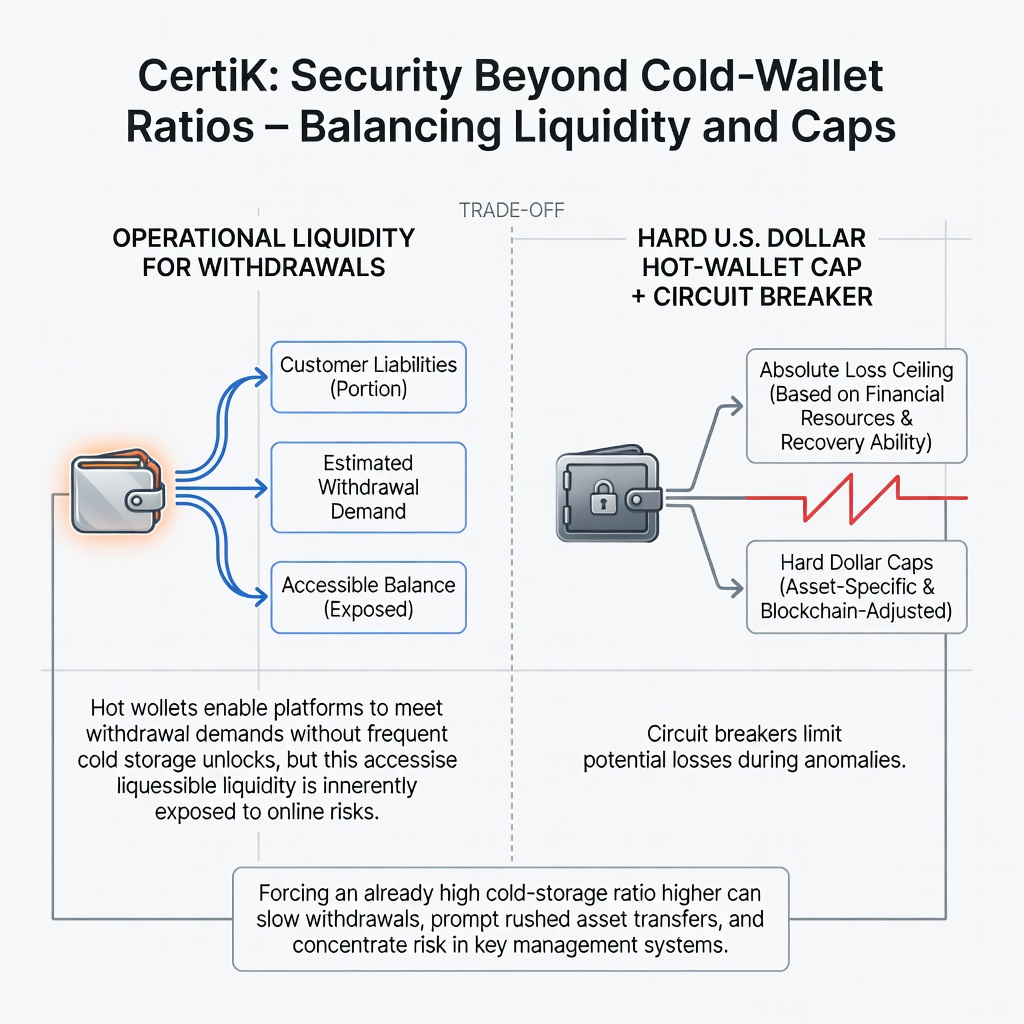
CertiK treated the cold-storage ratio as a signal of online exposure, not a score by itself. Raising the cold-wallet share usually reduces online risk. When the share is already high, pushing it higher may bring only limited further benefit. An overly rigid ratio can also slow withdrawals, push a platform to move assets in a hurry, and concentrate risk in the key-management system.
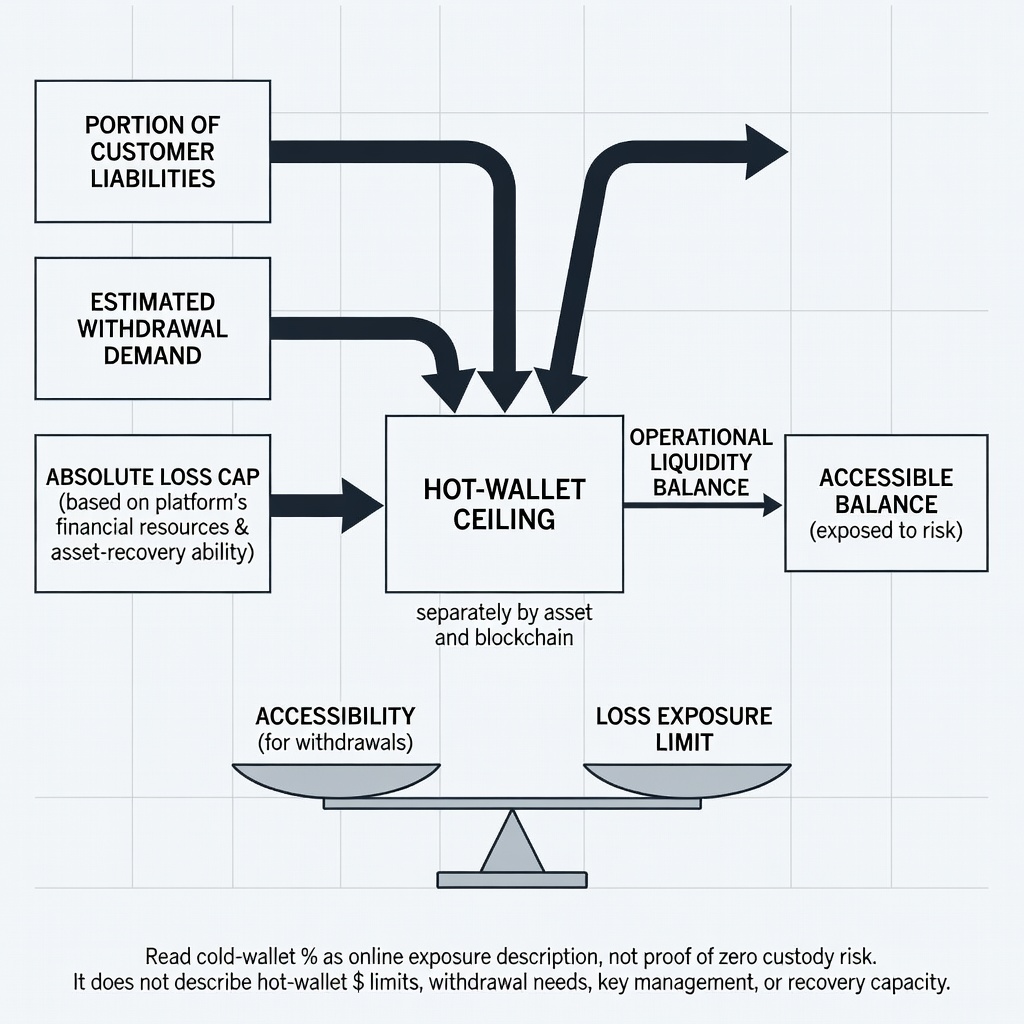
The trade-off is between accessibility and how large a loss can get. Hot wallets exist so a platform can meet withdrawals without constantly unlocking cold storage. That accessible balance is also the exposed balance. CertiK suggested setting hot-wallet caps separately for different assets and blockchains, using three standards together:
- a portion of customer liabilities
- estimated withdrawal demand
- an absolute loss ceiling based on the platform’s financial resources and its ability to recover assets
The team’s view was that platforms should keep enough liquidity for ordinary operations, while hard dollar caps and circuit breakers limit potential losses. The report did not specify any cap, percentage, or breaker threshold.
For a holder, the check supported by this reporting is modest. Read a published cold-wallet percentage as a description of online exposure, not as proof that custody risk is gone. It does not, by itself, describe hot-wallet dollar limits, withdrawal needs, key management, or recovery capacity. Nothing in the report says a particular storage mix removes risk, and it does not rank Gate, Coinbase, or Binance.
Original report: BlockBeats, November 10, 2026