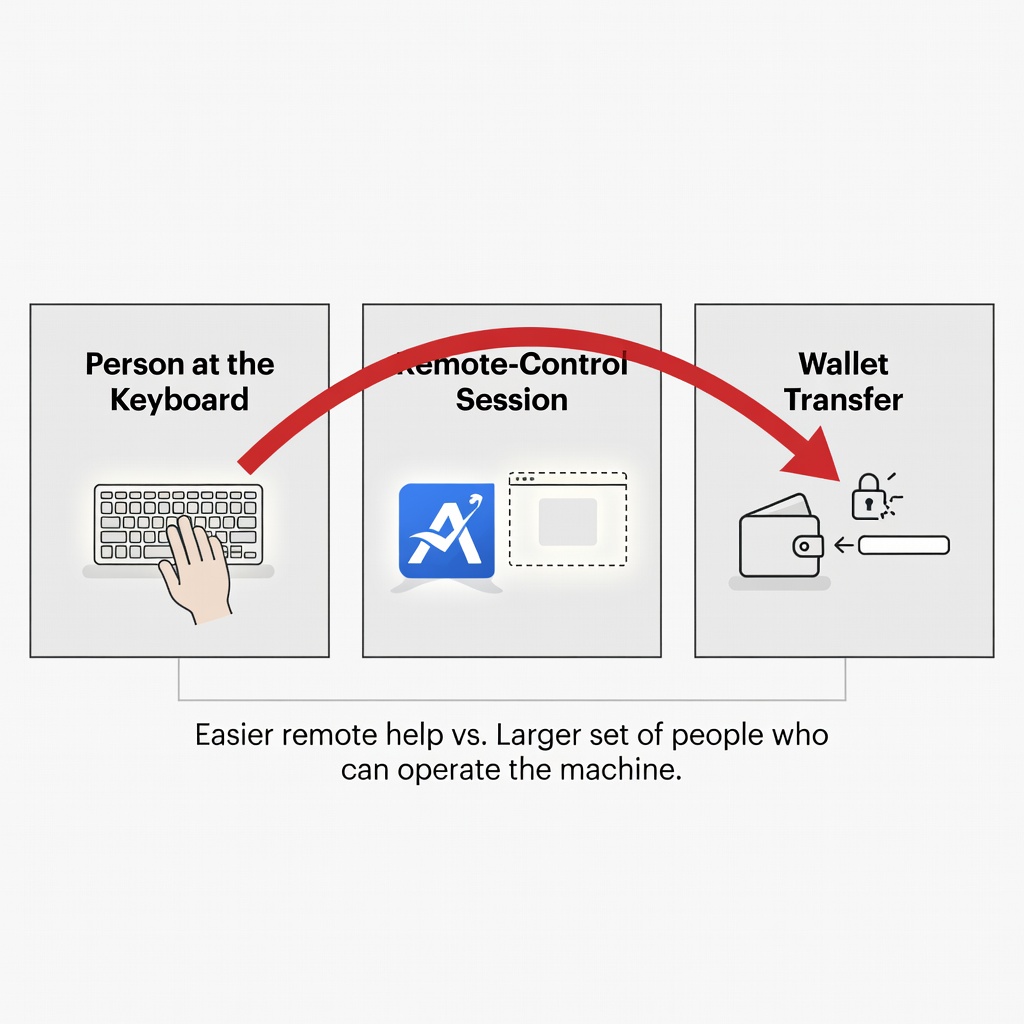
If the computer you use to hold crypto can be operated by someone else, that person may be able to send funds without breaking the wallet’s cryptography. A case reported on 11 November 2026 shows how that risk was meant to be used — and how it stopped before anyone entered the home.
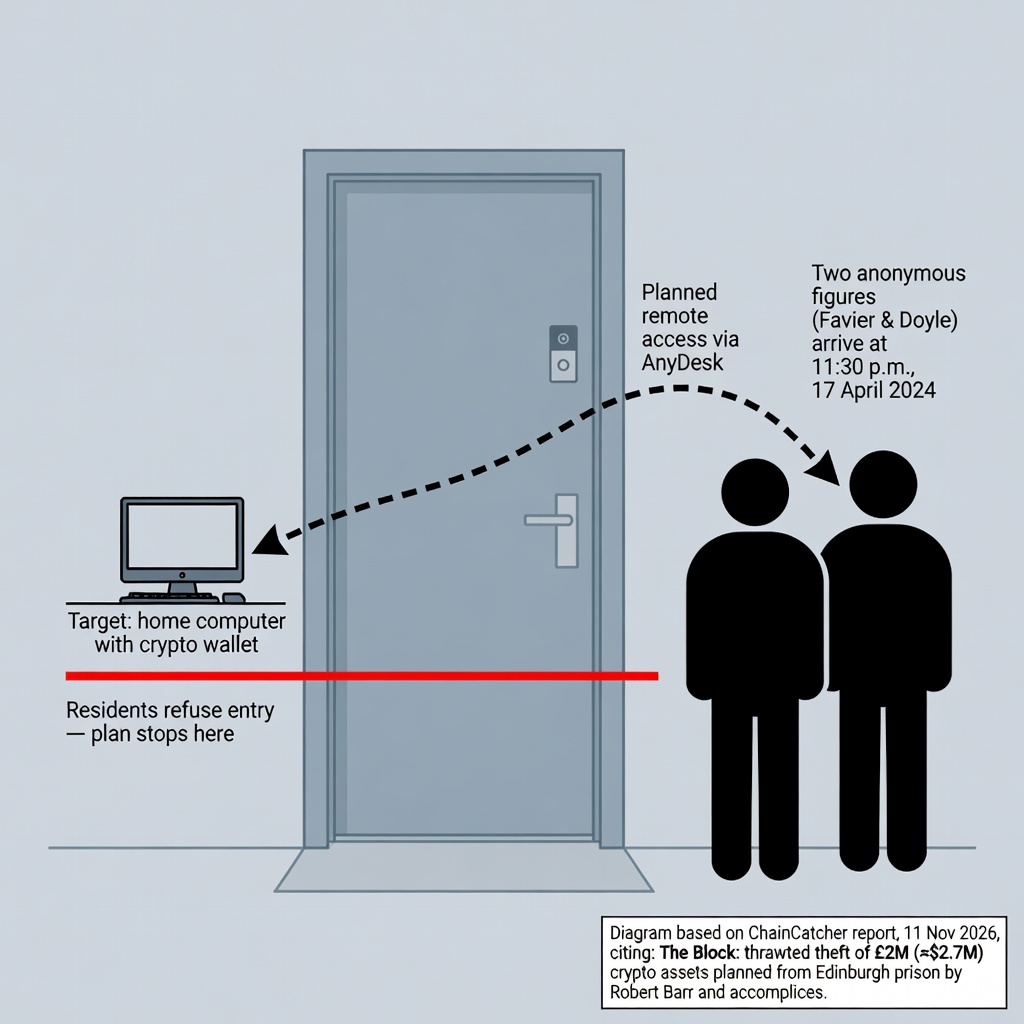
ChainCatcher, citing The Block, reported that the Scottish High Court sentenced Robert Barr to eight years in prison for remotely planning the theft of about £2 million (about $2.7 million) in crypto assets while he was already serving a sentence in an Edinburgh prison. Two assistants in the same case, Iain Doyle and Sean Favier, received five years and four years. All three had already pleaded guilty to taking part in organised serious crime. Those sums are the size of the theft that was planned. The report does not describe completed transfers or confirmed losses from this attempt.
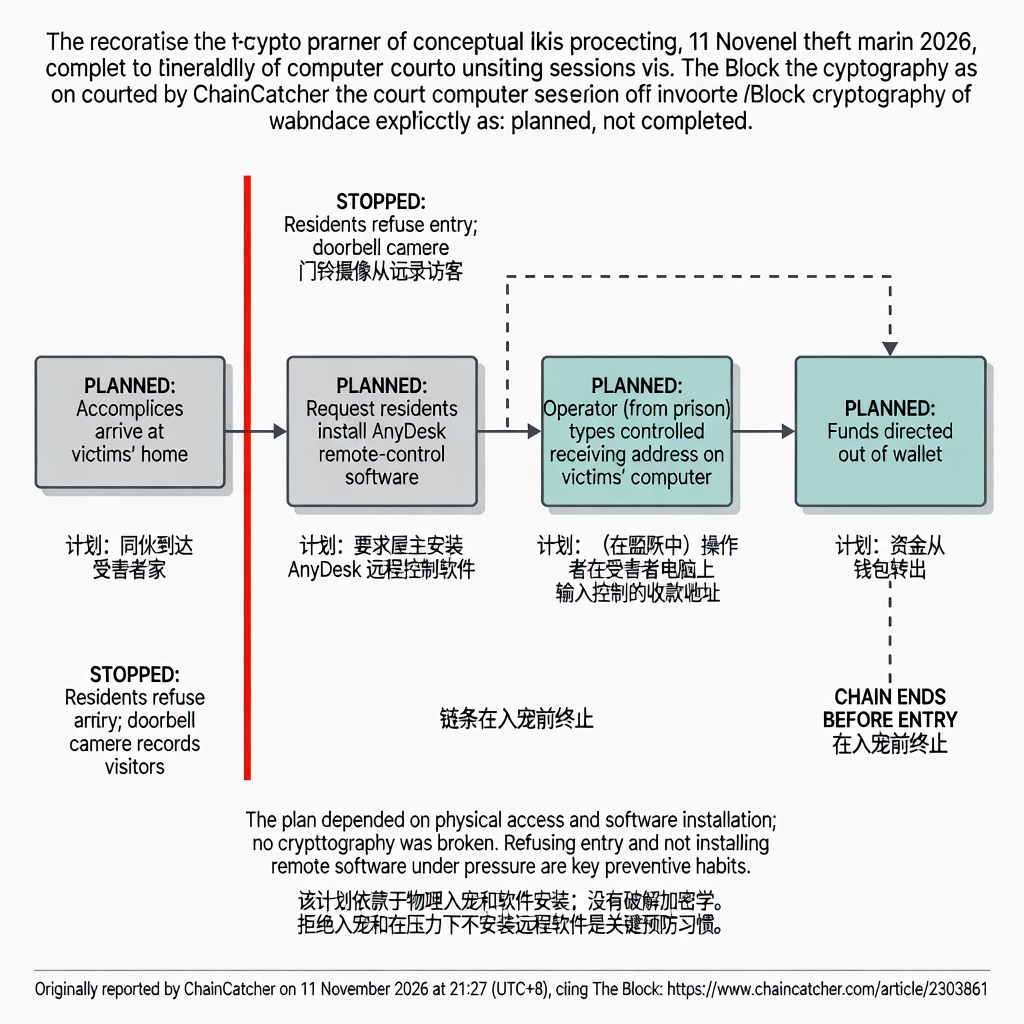
The method set out in court was narrow. Barr was to have accomplices enter the victims’ home and ask the residents to download the remote-control program AnyDesk. From prison, he would then operate the couple’s computer, enter a receiving address he controlled, and move funds out of their wallet. On the evening of 17 April 2024, at about 11:30 p.m., Favier and Doyle arrived at the couple’s address. A doorbell camera recorded them. The residents refused to open the door, the two men did not get inside, and the plan failed.
Judge Lord Cubie called it a crime that combined 21st-century computer technology with old-fashioned burglary. On 25 June 2024 police seized Barr’s phone and found detailed messages in which he directed the two accomplices. The judge treated it as a significant aggravating factor that Barr, who had already served 21 months for crypto-related fraud, organised further crime from prison. The court said a conviction after trial would have meant eight years and ten months. The report states that Barr will attend a serious-crime prevention order hearing on 17 November.
For someone holding assets at home, the useful line is between the wallet’s cryptography and the computer session that can authorise a send. Remote-access software trades accessibility for a wider circle of control: it can make legitimate help easier, and it can also let an untrusted person type a destination and move funds. Nothing reported here says the cryptography was broken. The plan depended on getting through the door and having the residents install the software.
Two checks follow only from what stopped this attempt. Do not install remote-control software because someone at the door asks, and do not open the door to make that request easier. The camera already in place recorded the visitors; refusing entry is what kept the plan away from the computer. Neither of those habits, nor any custody setup, removes every risk.
Originally reported by ChainCatcher on 11 November 2026 at 21:27 (UTC+8), citing The Block: https://www.chaincatcher.com/article/2303861