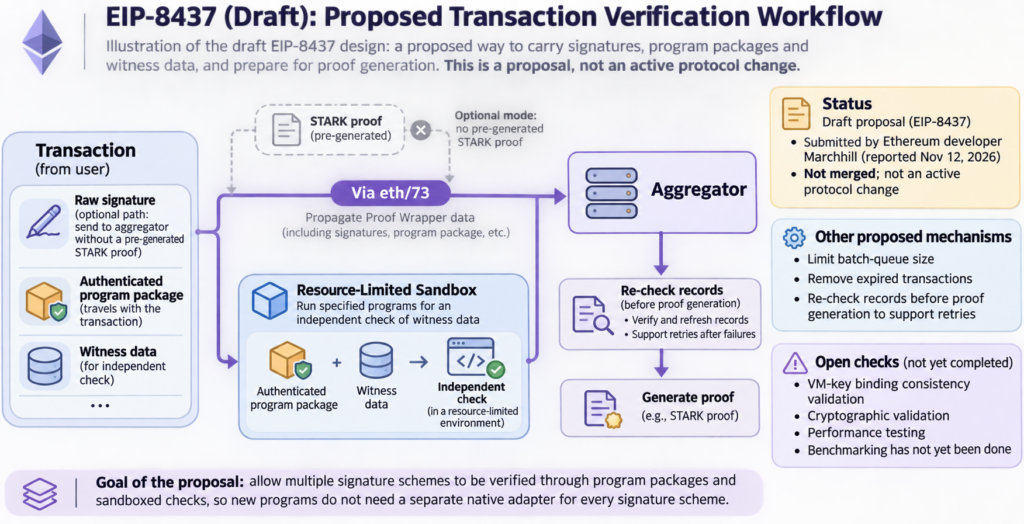
For anyone assessing how a transaction’s signature is checked, the key distinction is that EIP-8437 is a proposal, not an active protocol change. As reported on November 12, 2026, Ethereum developer Marchhill had submitted the draft, but it had not been merged.
The proposal would use the eth/73 protocol to propagate Proof Wrapper data. An optional mode would let transactions send raw signatures to an aggregator without first generating a STARK proof. It would also allow authenticated program packages to travel with transactions, so specified programs could run independent checks of witness data in a resource-limited sandbox. This approach is intended to avoid building a separate native adapter for every signature scheme.
The draft also proposes limits on batch-queue size, removal of expired transactions, and a fresh check of records before proof generation to support retries after failures. Marchhill noted that checks of VM–key binding consistency, cryptographic validation and performance testing remained unfinished; benchmarking had not yet been done. Those open checks matter when evaluating the proposal’s security properties, rather than treating its proposed verification path as already established.