For Bitcoin holders, the distinction in BlackRock’s November 25, 2026 outlook was between fewer rate increases and rate cuts. Its research arm expected the Federal Reserve to raise rates twice over the following year, while it said markets were pricing in as many as three hikes. If BlackRock was right, rates could put less pressure on Bitcoin than investors anticipated. That would not, by itself, imply a price gain.
Why BlackRock saw room for fewer hikes
BlackRock estimated that the energy shock added 1.5 percentage points to US headline inflation at its peak in September. By the end of 2027, it expected cheaper energy to bring inflation 0.8 percentage points below the path it would have followed without the shock. The firm still expected the US economy to grow more than 2% in 2027, though at a slower pace as AI investment slowed and the boost from tax cuts faded.
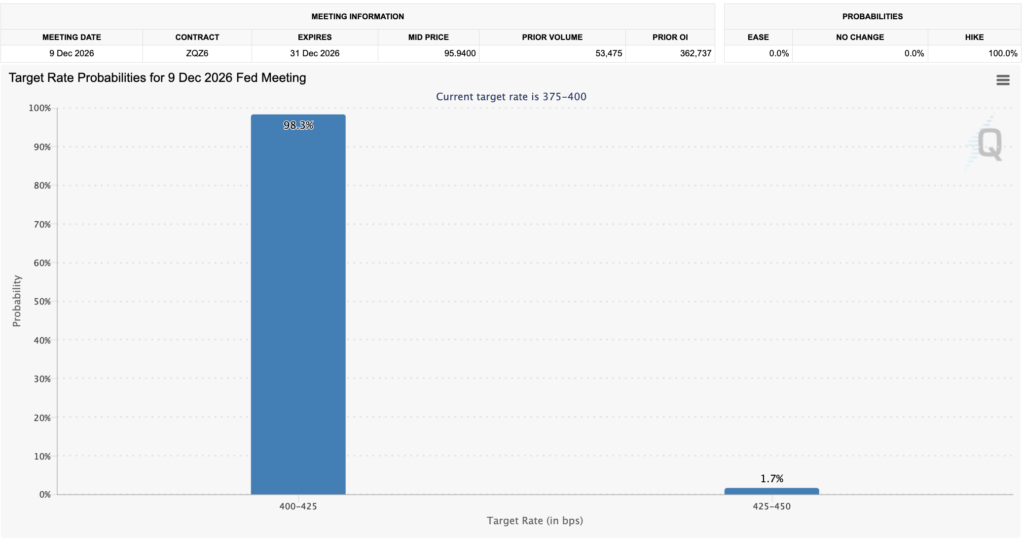
BlackRock nevertheless saw core inflation near 3%. Wages were rising about 4%, keeping pressure on services prices and leading the firm to favor a December hike. CME FedWatch put the probability of a hike at the December 9 meeting at nearly 100%.
BlackRock also said the neutral interest rate—the rate that neither stimulates nor slows growth—could be higher than earlier estimates. The firm favored shorter Treasury maturities. At about 4.6%, the two-year Treasury yield offered investors interest income that Bitcoin itself does not pay.
What could change the outlook for Bitcoin
Bitcoin rebounded alongside stocks and gold on November 23, even as US spot Bitcoin exchange-traded funds recorded about $570 million in outflows, according to SoSoValue. The US Dollar Index closed that day at a 20-month high after four consecutive weekly gains.
October’s Personal Consumption Expenditures inflation reading, due November 25, was the next test. A softer reading would strengthen the case for fewer hikes and could ease pressure on Bitcoin. A hotter reading would support existing market expectations. In particular, if services inflation remained strong enough to prompt a third hike, BlackRock’s two-hike forecast would fall short. The December 4 jobs report and the Fed’s December 9 decision were the next scheduled tests after the inflation release.