For anyone planning to hold ether over the long term, the practical question is not whether a quantum-resistant signature design exists. It is when Ethereum accounts could use one—and whether the network can introduce it without disrupting contracts that already work.
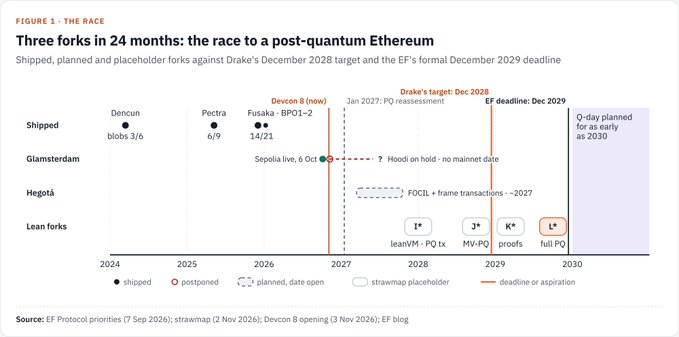
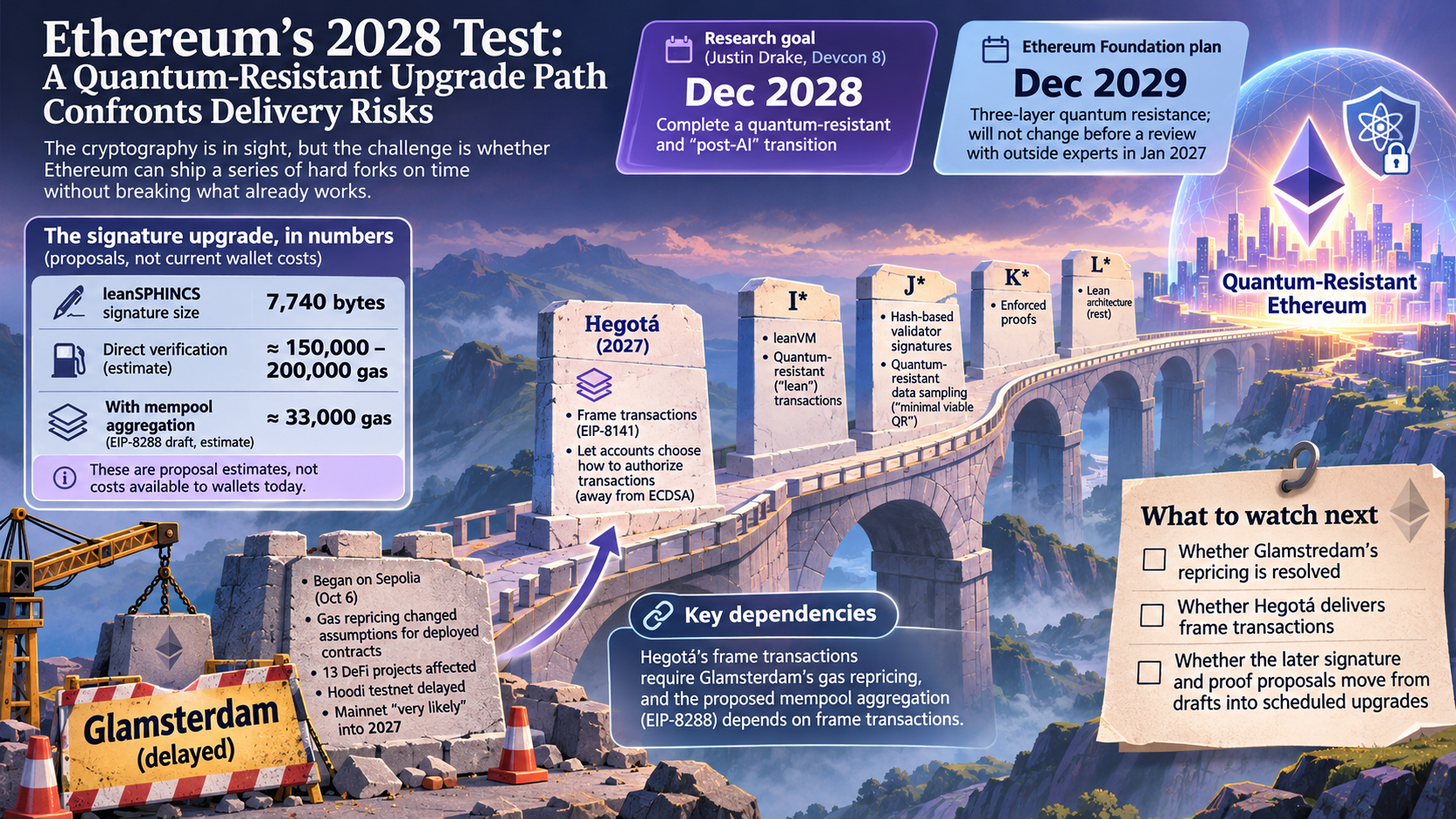
As reported on November 10, 2026, Ethereum Foundation researcher Justin Drake said at Devcon 8 in Mumbai that he hoped Ethereum could complete a quantum-resistant and “post-AI” transition by December 2028. That is a research goal, not an adopted deadline. The Ethereum Foundation’s published plan targets three-layer quantum resistance by December 2029 and says that date will not change before a review with outside experts in January 2027.
A path for changing account signatures
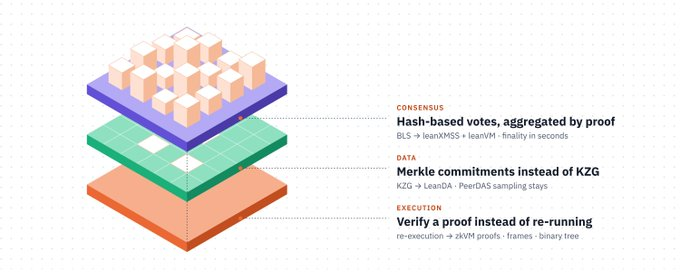
The draft roadmap places Hegotá in 2027. It is not itself a quantum-resistance upgrade, but its proposed frame transactions, under EIP-8141, would let accounts specify how they authorize transactions. That would provide a route away from today’s ECDSA signatures without requiring a separate hard fork for every replacement scheme. Later proposed upgrades would introduce quantum-resistant transactions, hash-based validator signatures and other changes to Ethereum’s proving and data systems.
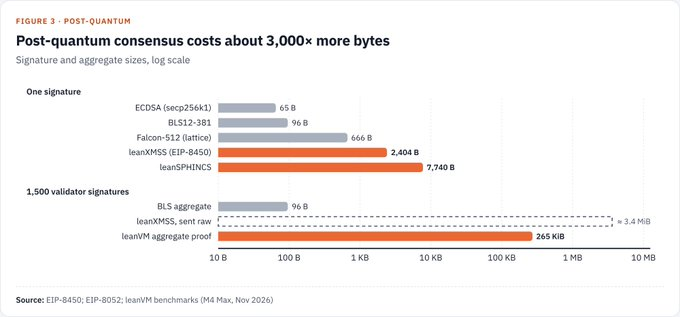
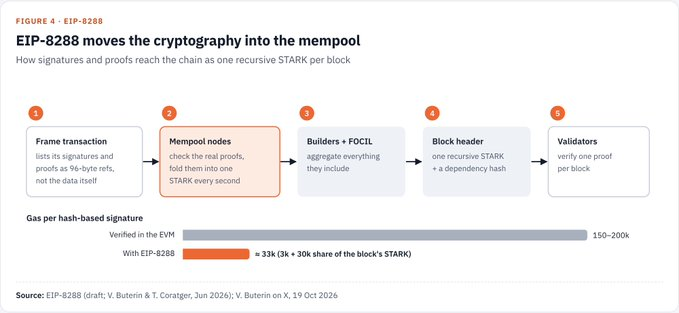
Signature size is one obstacle. The source describes a leanSPHINCS signature as 7,740 bytes and says direct verification would cost roughly 150,000–200,000 gas. Draft EIP-8288 proposes checking signatures and proofs in the mempool, then placing an aggregated proof in the block. Its estimated cost for a leanSPHINCS signature is about 33,000 gas. Those are proposal estimates, not costs available to wallets today. The draft still has unresolved specifications and no scheduled fork.
Why delivery matters as much as cryptography
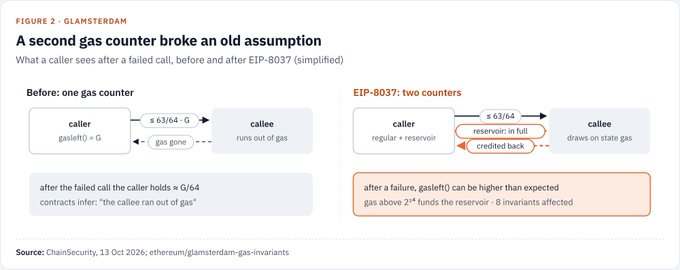
Glamsterdam, the preceding hard fork, illustrates the deployment risk. After it began running on the Sepolia testnet on October 6, a proposed gas repricing was found to change assumptions relied on by deployed contracts. ChainSecurity identified a way the change could let some error handlers complete where they previously ran out of gas; an AllCoreDevs summary counted 13 affected DeFi projects. The Hoodi testnet was delayed, with no new Hoodi or mainnet date given in the report. All Core Devs coordinator Nixo wrote that the issue would “very likely” push Glamsterdam’s mainnet release into 2027.
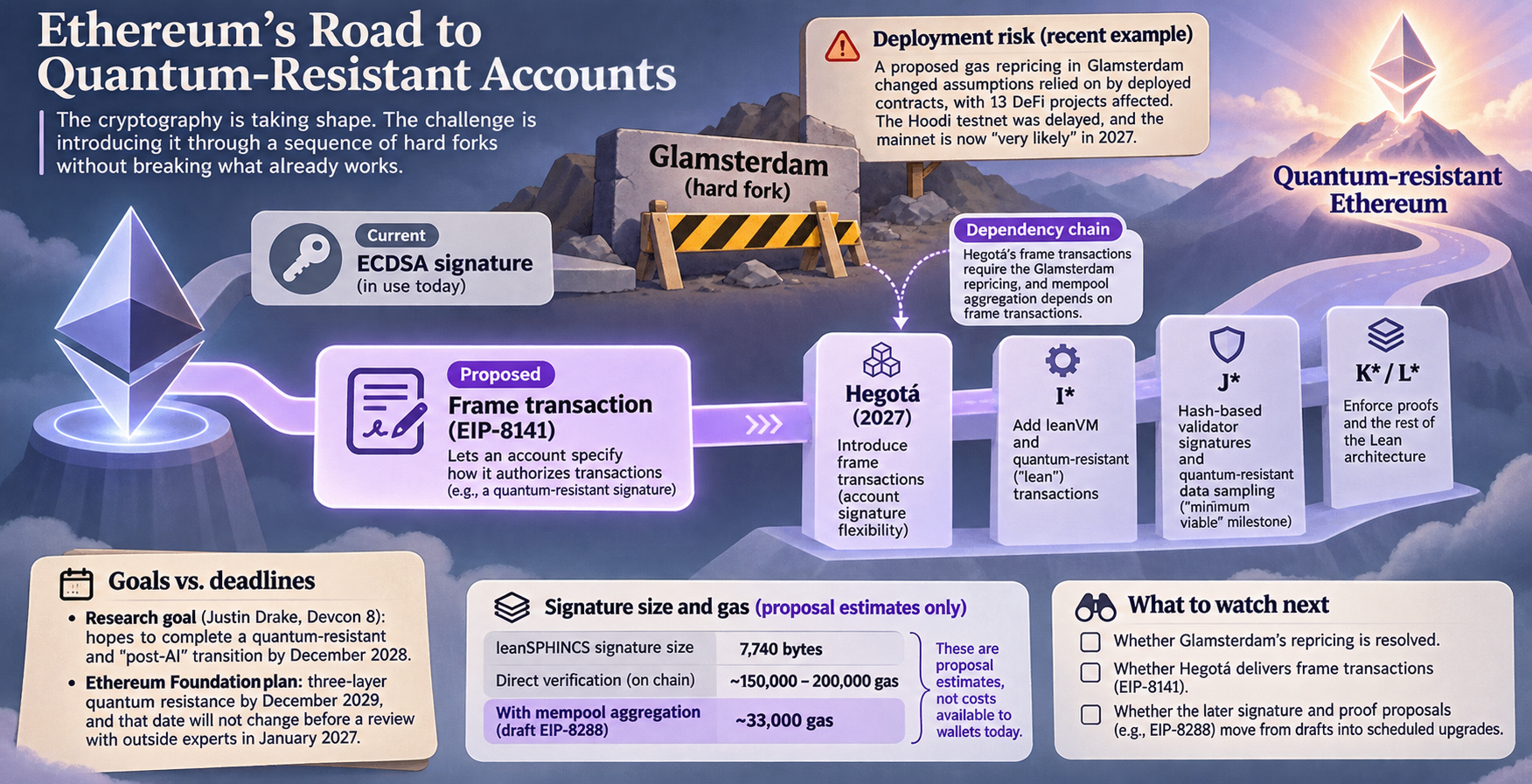
That delay matters to the account-upgrade path: Hegotá’s frame transactions list the Glamsterdam repricing as a requirement, while the proposed mempool aggregation depends on frame transactions. Drake’s December 2028 goal would require a faster succession of hard forks than Ethereum has recently maintained.
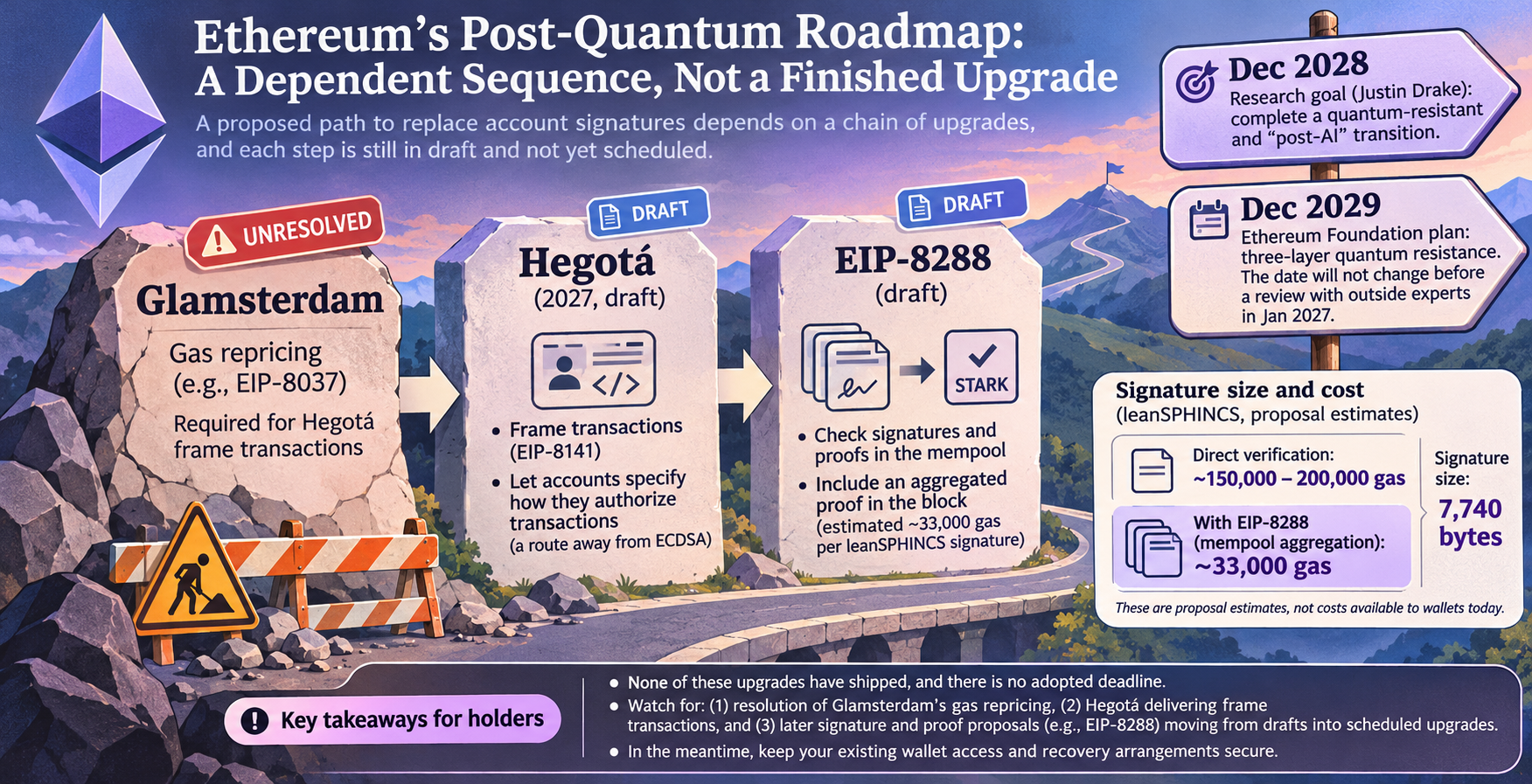
For holders, the distinction is straightforward: a proposed route to replace signatures is not yet a wallet migration procedure. The checks supported by this report are to watch whether Glamsterdam’s repricing is resolved, whether Hegotá delivers frame transactions, and whether the later signature and proof proposals move from drafts into scheduled upgrades. None of those steps removes the need to keep existing wallet access and recovery arrangements secure in the meantime.