
Opening a wallet to check a balance can reveal information before you send a transaction. A remote service handling the wallet’s request may learn which address you are checking. If you then make a Bitcoin payment, its inputs, outputs and amounts become part of a public ledger. Those are different privacy exposures, and protecting against one does not necessarily address the other.
In an analysis published on November 16, 2026, Lithos examined that distinction through Bitcoin’s original design and later privacy systems. The practical question for anyone holding crypto is not whether a tool is labelled “private,” but what it conceals, what remains visible and whom the user must trust.
Bitcoin’s deliberate privacy trade-off
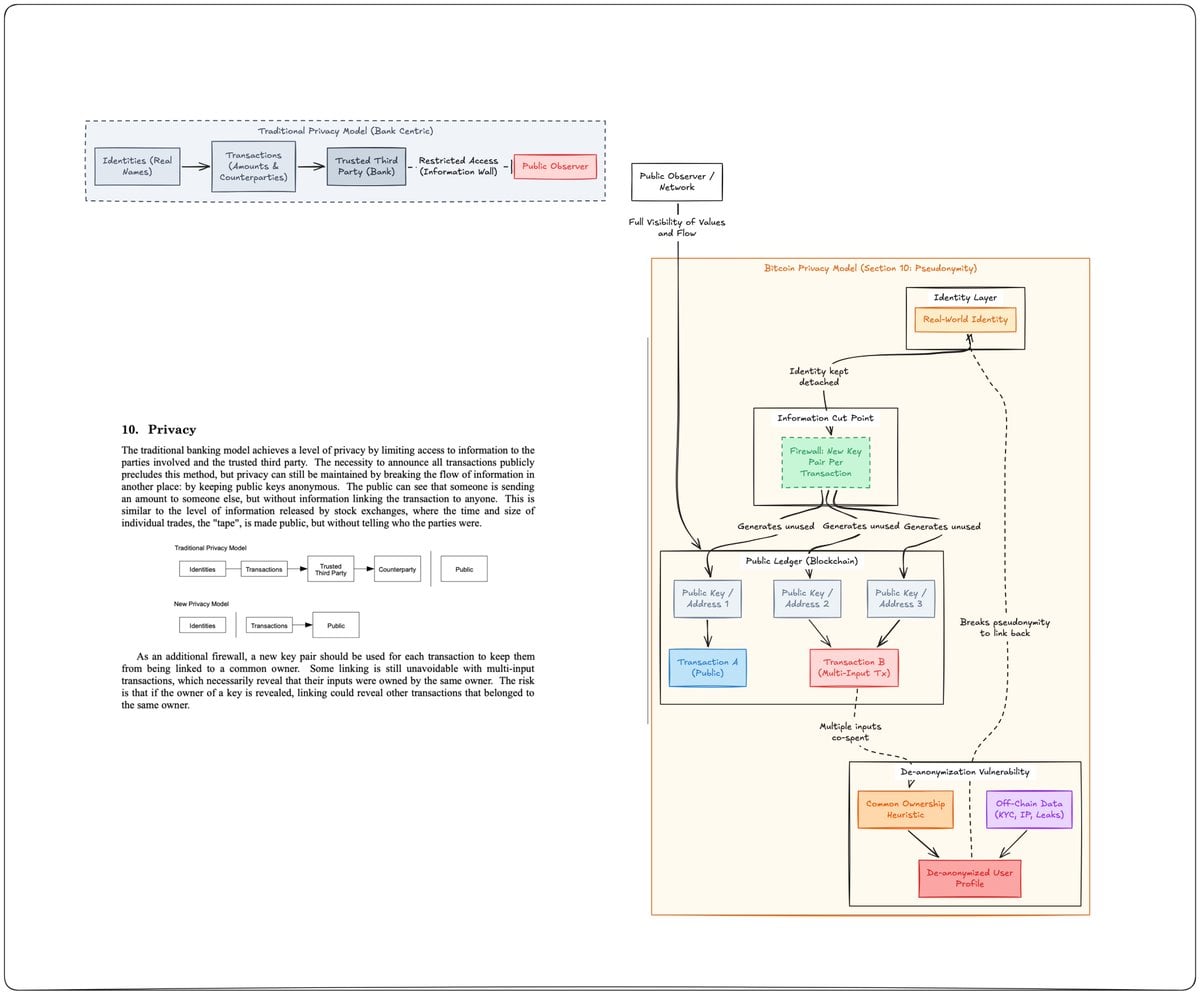
Section 10 of Satoshi Nakamoto’s 2008 Bitcoin white paper addresses privacy directly. Transactions must be public so the network can verify them without a bank controlling the ledger. Nakamoto’s proposed separation was to keep public keys from being linked to real-world identities, including by using a new key pair for each transaction.
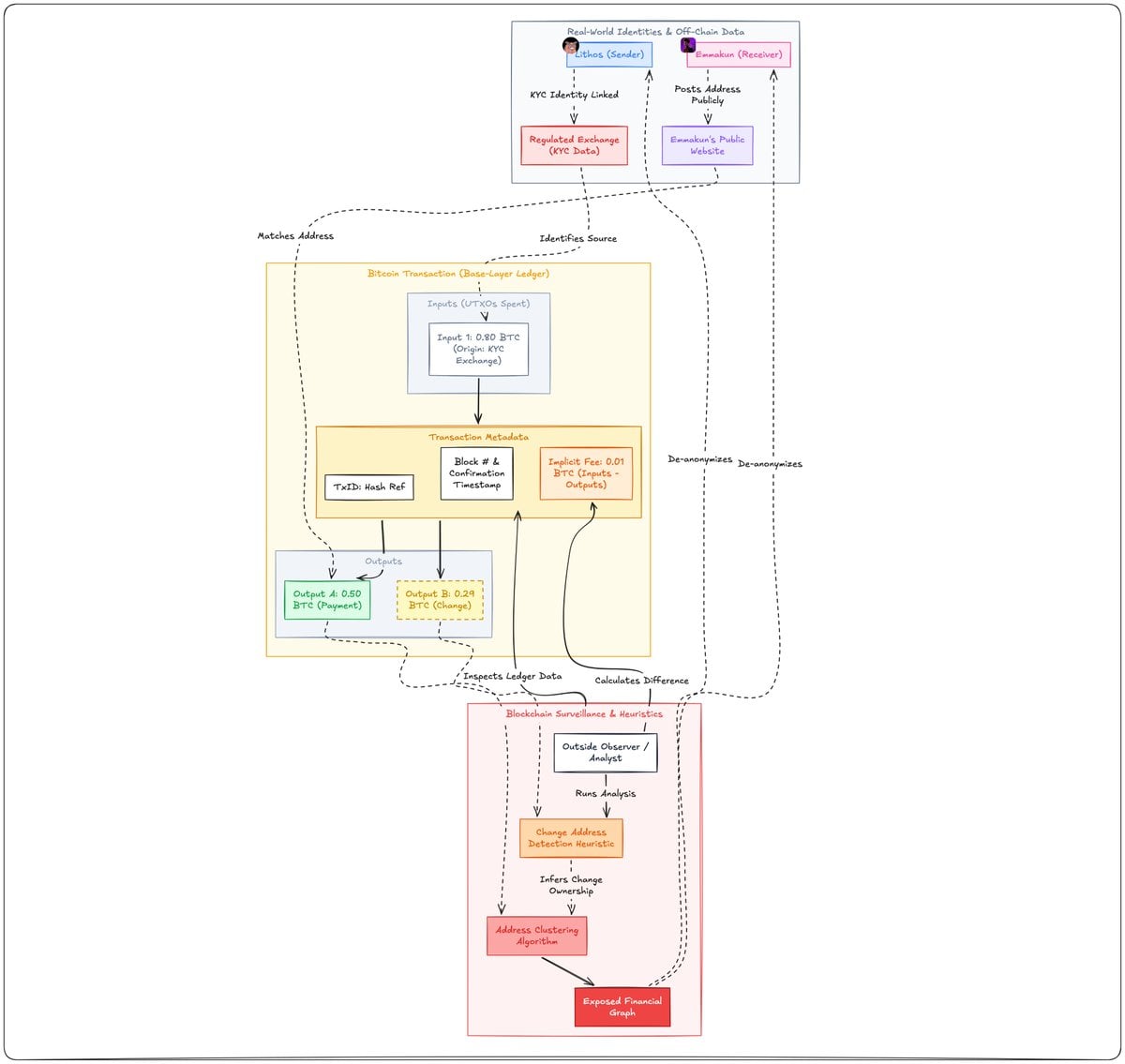
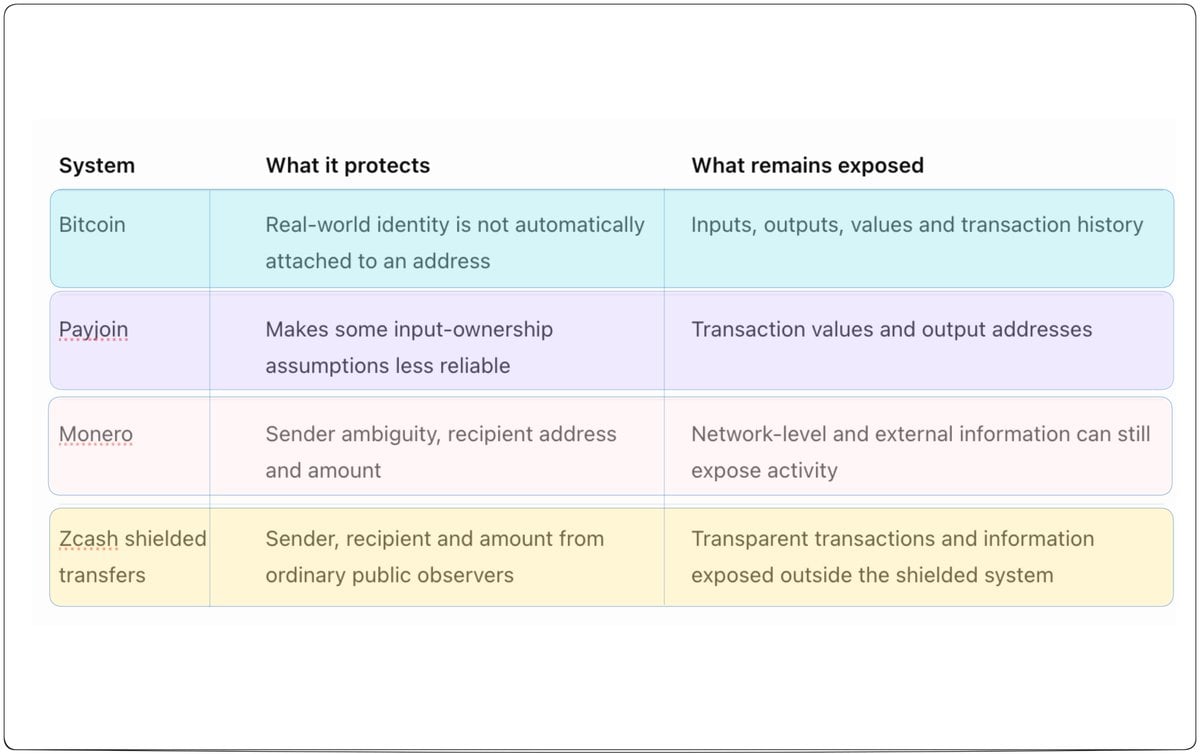
That provides pseudonymity, not confidential payments. An observer can inspect a Bitcoin transaction’s spent outputs, destination outputs, amounts, and confirmation block and timestamp. Fees can be calculated from the difference between input and output totals. If an address becomes associated with a person—for example, through a publicly posted donation address—those records can become easier to interpret. Analysts also use clues such as likely change outputs, though such inferences are not always correct.
Nakamoto noted that transactions combining multiple inputs can expose links between them. Later techniques illustrate why an apparent link should not automatically be treated as proof of common ownership. Payjoin, defined in BIP 78, lets a recipient contribute an input to a payment, frustrating the common analysis assumption that every input belongs to the sender. It does not hide the payment amounts or make the ledger confidential.
Different ways to conceal payment details
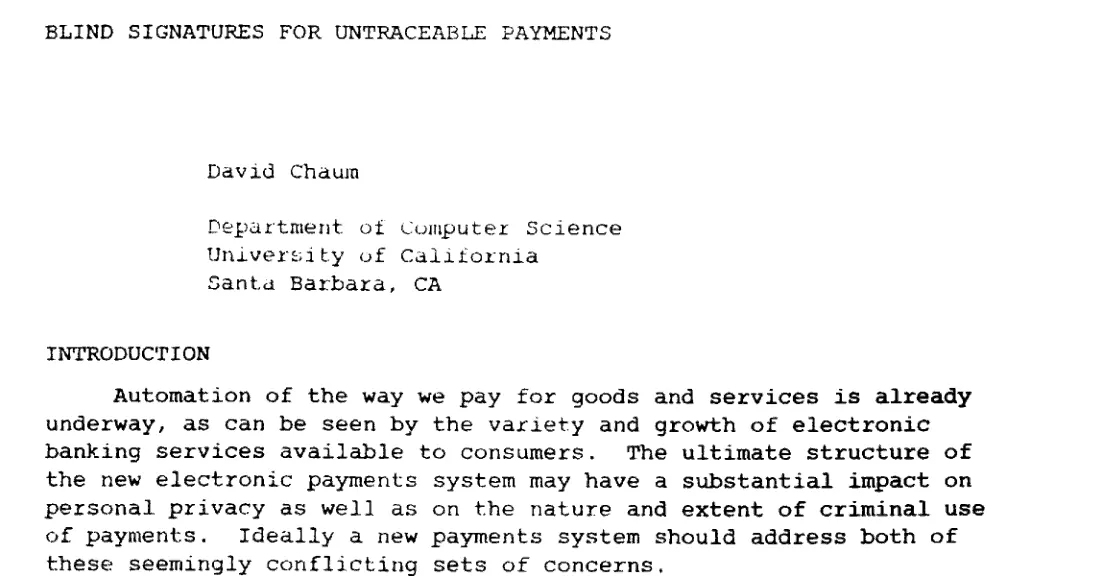
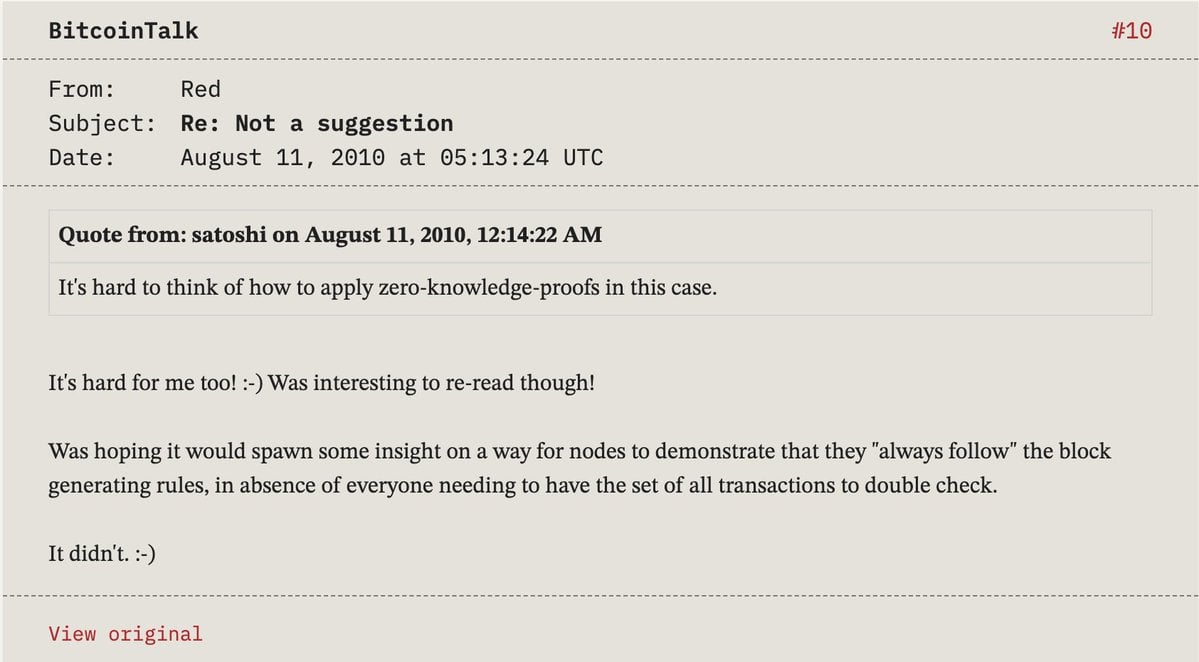
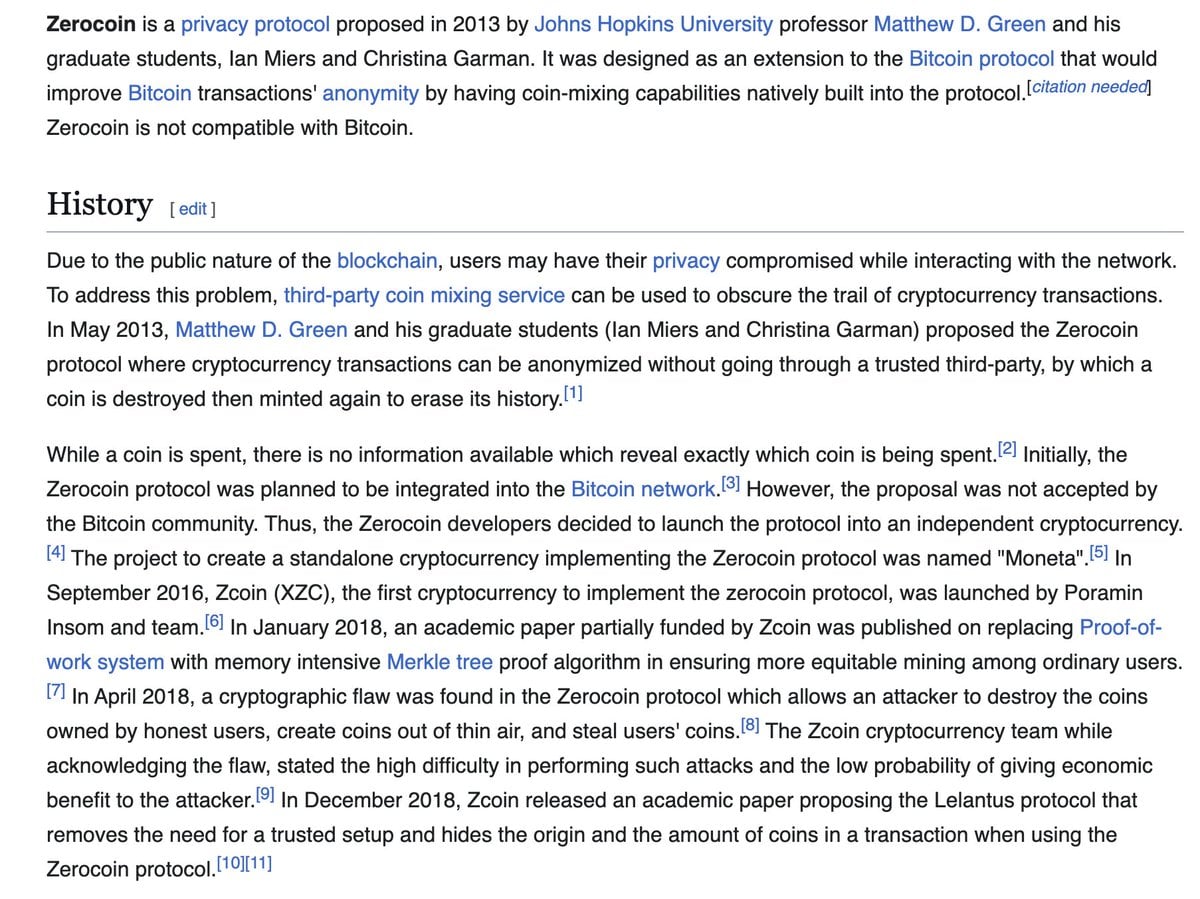
The privacy problem predates Bitcoin. David Chaum’s 1982 work on blind signatures explored payments that an issuer could not readily link to a later transaction, while still relying on a central issuer. Later research pursued privacy alongside decentralized verification. The 2013 Zerocoin paper sought to break transaction links but still exposed destinations and amounts; the 2014 Zerocash work used zk-SNARKs to explore hiding senders, recipients and amounts while allowing validity checks.
Today’s systems protect different parts of a transaction:
- Monero uses ring signatures to obscure which output was spent, stealth addresses to reduce links to a recipient’s public address, and RingCT to conceal amounts while allowing network checks. Its protections still have limits: auxiliary information and network-level observation may reveal clues. The source notes that Dandelion++ reduces some broadcast-tracing risk but does not prevent all network surveillance.
- Zcash offers shielded transactions that conceal key payment details on the public ledger. It also supports transparent addresses, whose transactions remain visible. Movement between transparent and shielded areas, wallet support and the size of the anonymity set affect practical privacy. Viewing keys permit selected disclosure without handing over spending authority.
Neither design means that a compromised device, an exchange’s identity records or network metadata cease to matter.
Privacy beyond transfers
Smart contracts introduce another boundary: an application may need to verify an action without publishing every input used to perform it. The projects discussed in the November 2026 analysis take distinct approaches.
Aztec combines private functions, executed in a user-side Private Execution Environment with proofs submitted to the network, and public functions that operate on shared state. Queries to remote nodes can still reveal what data a user is seeking. Oasis Sapphire instead uses hardware trusted execution environments for confidential contract execution, introducing trust assumptions about the hardware and its implementation. Umbra’s V2 design focuses on transfers within a shielded pool; deposits and withdrawals can still leave observable timing and amount clues. Privacy Pools uses association sets and zero-knowledge proofs to let a user demonstrate that a withdrawal belongs to a screened set without identifying the specific deposit. That is a selective-disclosure design, not a guarantee that every risk is removed.
The wallet itself is another boundary. A balance refresh, transaction-history lookup or contract simulation may tell a remote RPC provider which account the wallet is interested in. The source describes Kohaku as an open-source privacy-oriented wallet and SDK effort aimed at such leaks, including private information retrieval for account queries. That is a stated design goal, not evidence that ordinary wallet queries are already private.
For a holder assessing a privacy claim, a manageable first check is to ask which information the tool protects: ledger details, the link to a real-world identity, the wallet’s queries, or network activity. Bitcoin’s public verification and a user’s financial confidentiality are not the same property. As the source’s examples show, no single transaction feature covers every point where information can escape.