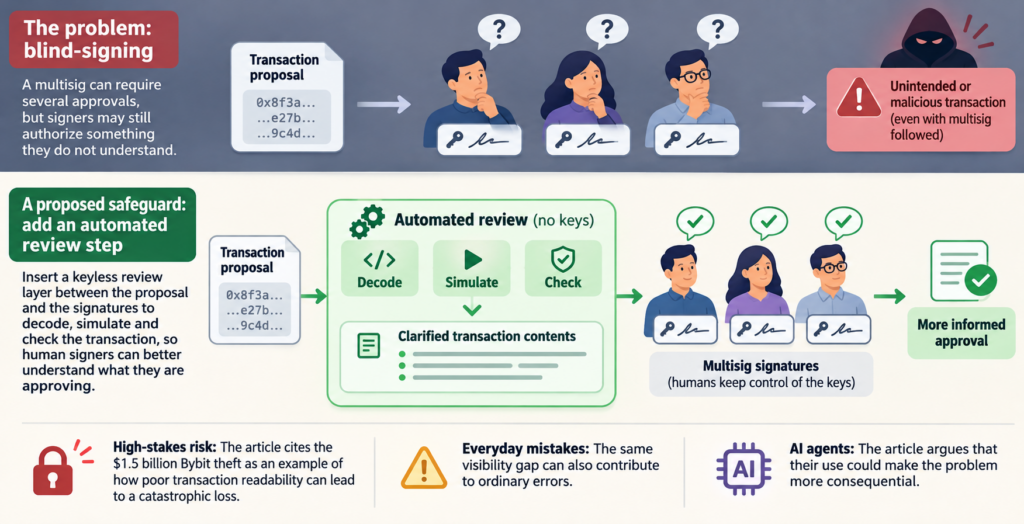
A multisig wallet can require several approvals, but that does not help signers understand a transaction they cannot independently verify. In an article published on June 5, 2026, the author identifies this gap as a blind-signing problem: the signing process can work as designed while people still authorize something they did not intend.
The article cites the $1.5 billion Bybit theft as an example. Its point is that poor transaction readability can leave signers approving a malicious transaction even when the multisig procedure is followed. It also warns that the same visibility gap can contribute to ordinary mistakes, and argues that AI agents could make it more consequential.
The author proposes adding an automated review step between a transaction proposal and its signatures. That layer would decode, simulate and check the transaction without holding keys, so human signers could better understand what they are asked to approve. This is a proposed safeguard, not a claim that multisig wallets already provide it or that it would eliminate every risk.