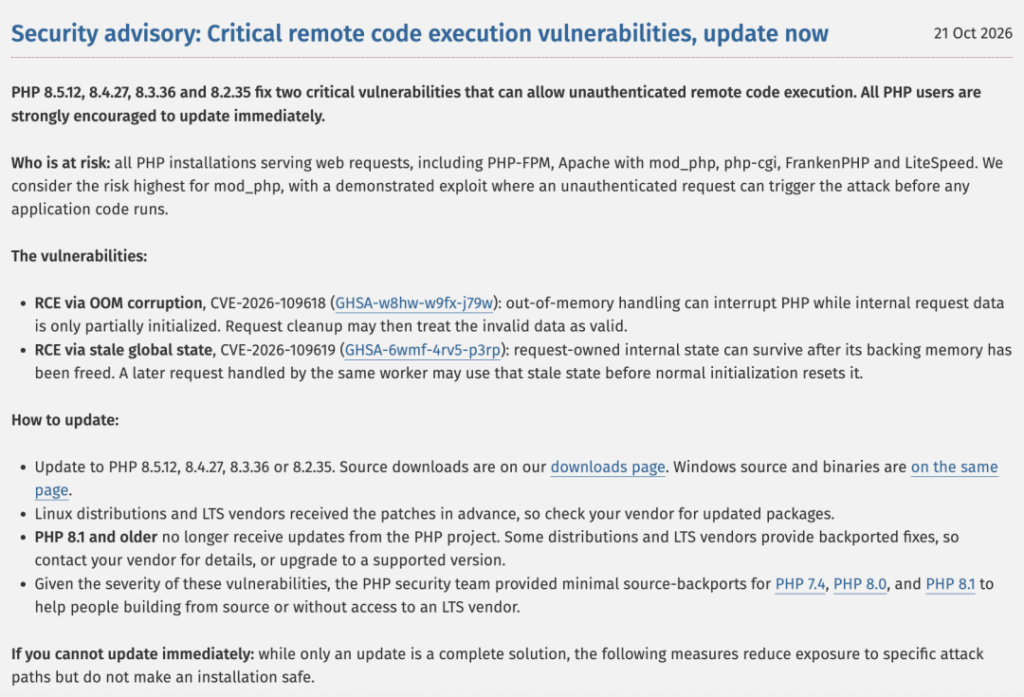
A vulnerable website is not the same thing as a compromised wallet. But if an attacker takes control of a Web3 service’s website or backend, they may be able to change what users are asked to sign or reach credentials used by connected services. That is the custody concern behind the PHP2Shell vulnerabilities reported in October 2026.
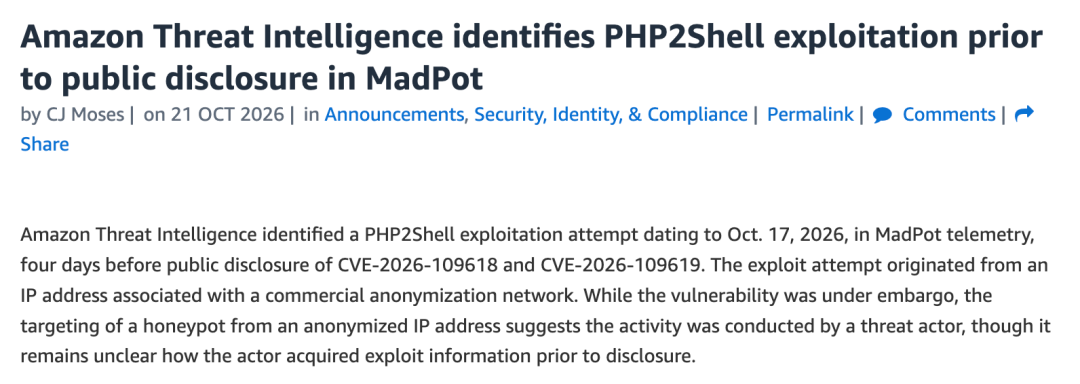
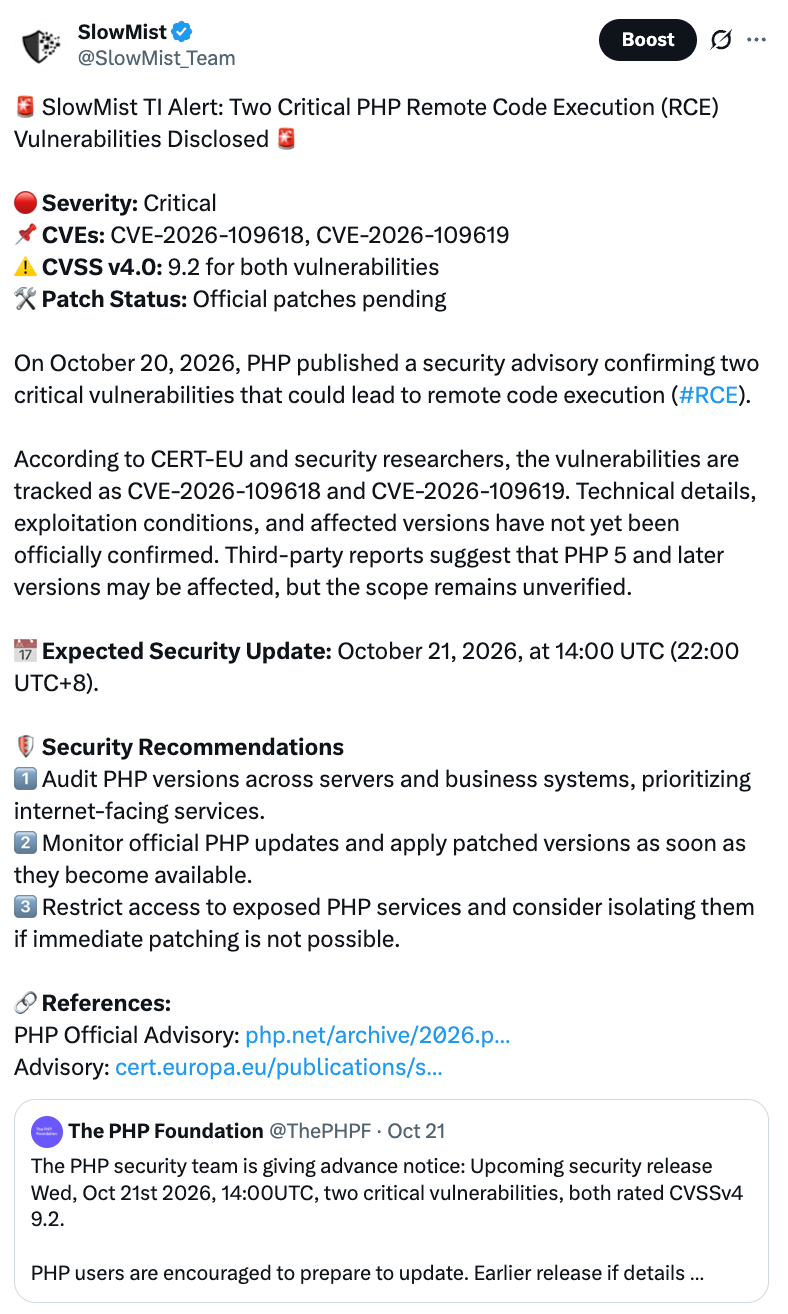
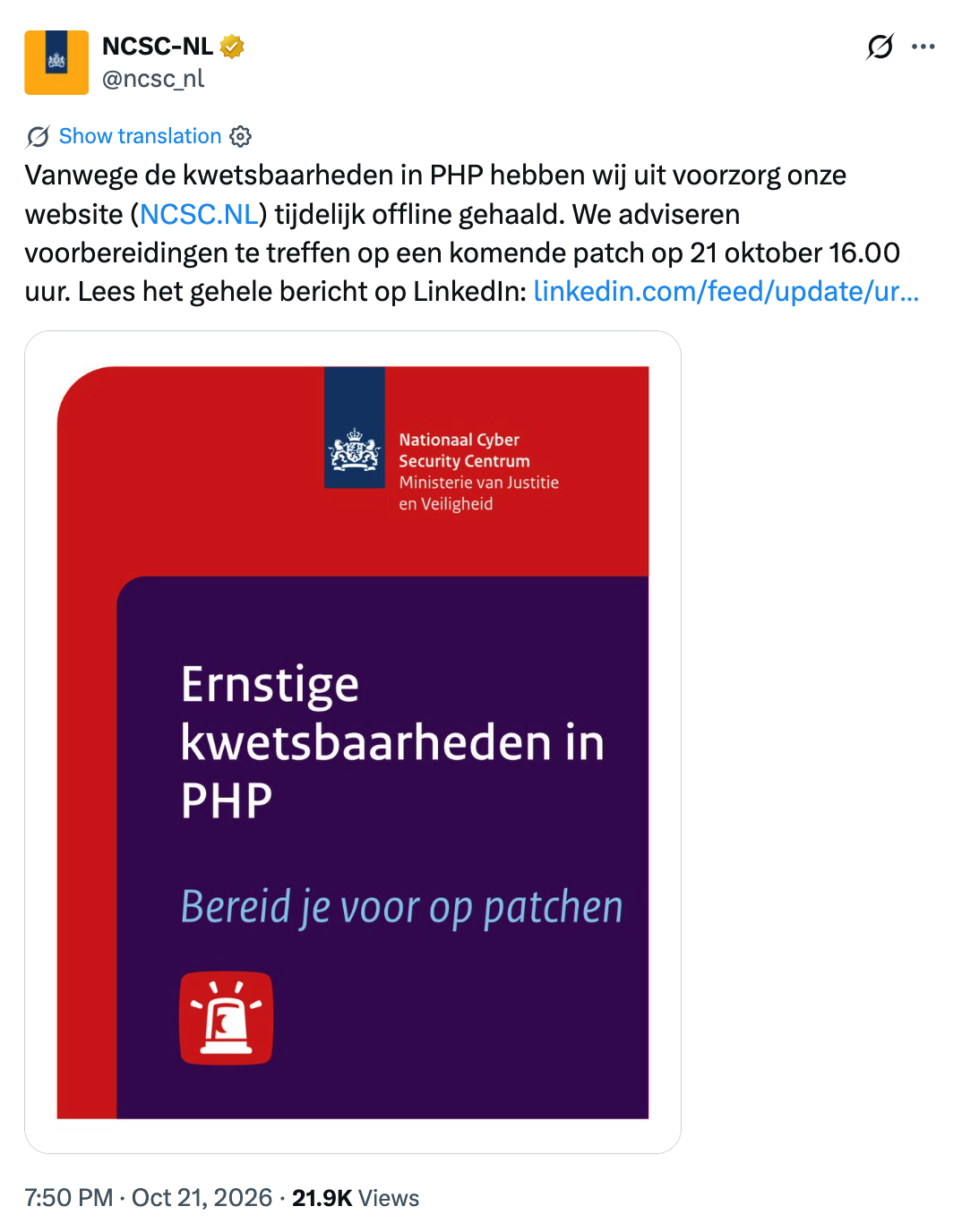
As reported on October 22, 2026, the PHP project had released emergency fixes on October 21 for CVE-2026-109618 and CVE-2026-109619. Both were rated 9.2 under CVSS v4.0 and could allow unauthenticated remote code execution. The report says vulnerability details leaked on October 20, before patches were available, prompting the PHP security team to move the release forward to October 21 at 14:00 UTC. Amazon’s threat intelligence team said its MadPot honeypots had observed exploitation attempts as early as October 17. Those observations do not establish that any particular Web3 service was compromised.
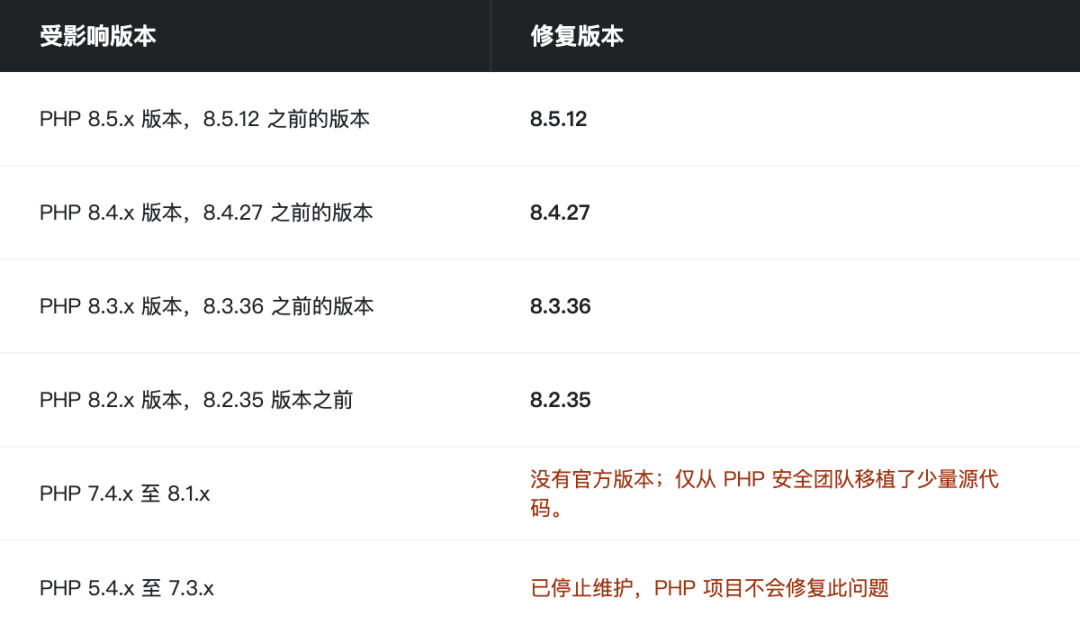
The two flaws involve different failures: one concerns memory corruption during out-of-memory handling; the other concerns stale global state carried into a subsequent request. According to the report, PHP confirmed that the latter could be used to attack PHP-FPM and achieve remote code execution. The reported affected range is PHP 5.4 through 8.5.11. Fixed releases are 8.2.35, 8.3.36, 8.4.27 and 8.5.12; operators of PHP 8.1 and older installations should seek a vendor backport or migrate to a supported version.
Where the wallet risk begins
The vulnerabilities target servers, not wallet cryptography or private keys directly. A compromised Web3 frontend could nevertheless display altered contract addresses, approval requests or signing prompts. A compromised backend might expose credentials if it can access them. Whether that becomes an asset loss depends on the permissions available to the attacker and the separation between the Web service and signing systems.
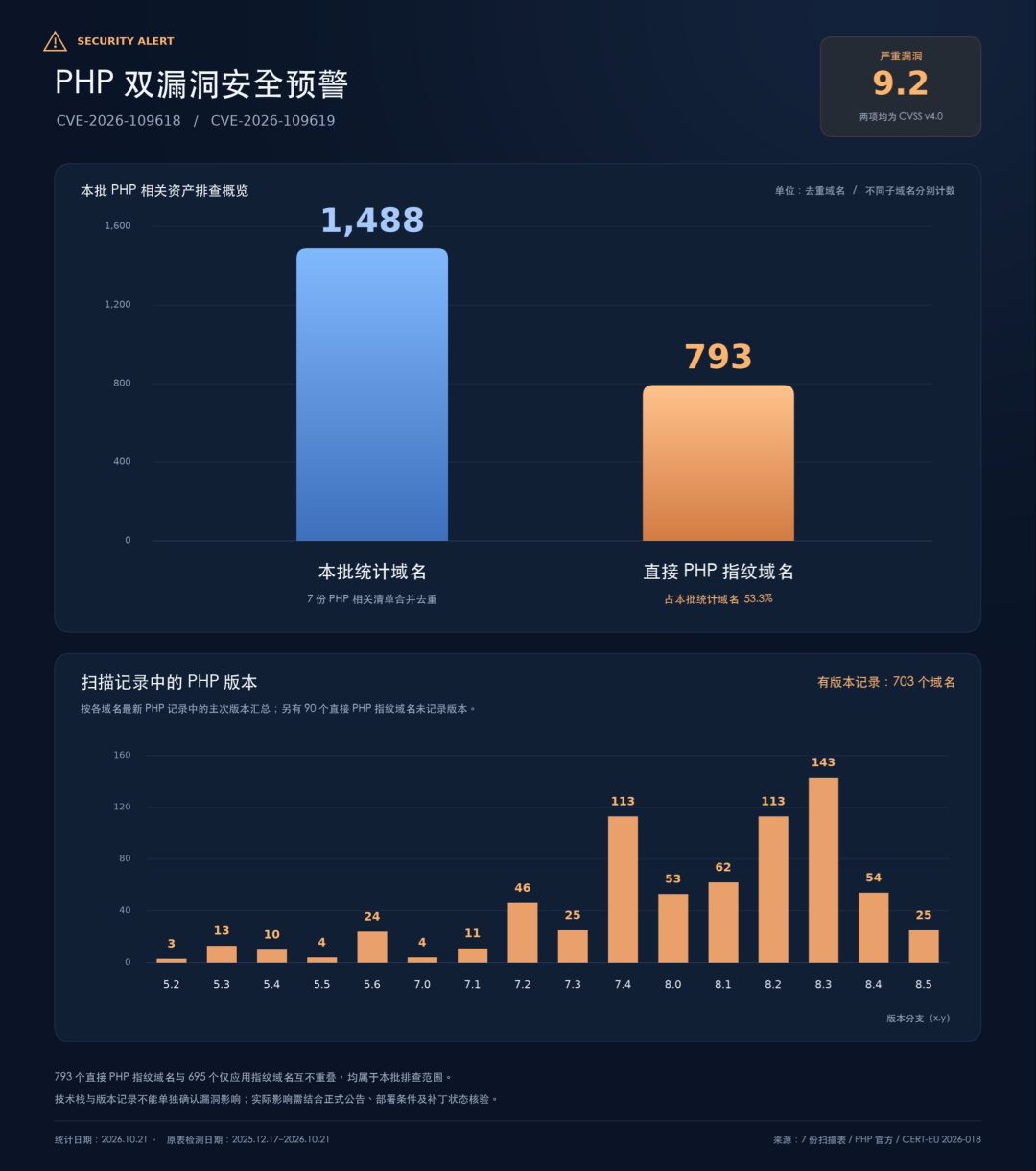
SlowMist’s MistEye system found direct PHP fingerprints on 793 of 1,488 crypto-related domains it scanned, or about 53.3%. A PHP fingerprint does not show that a site is vulnerable or breached.
For operators, the immediate checks are to identify affected PHP installations, apply a fixed release or equivalent provider patch, restart the PHP workers actually serving requests, and examine exposed systems for signs of intrusion. Where a system may have been compromised, credentials and signing access need review; patching alone cannot undo earlier access. Keeping Web servers separate from wallet keys and critical signing services limits what a server breach can reach.
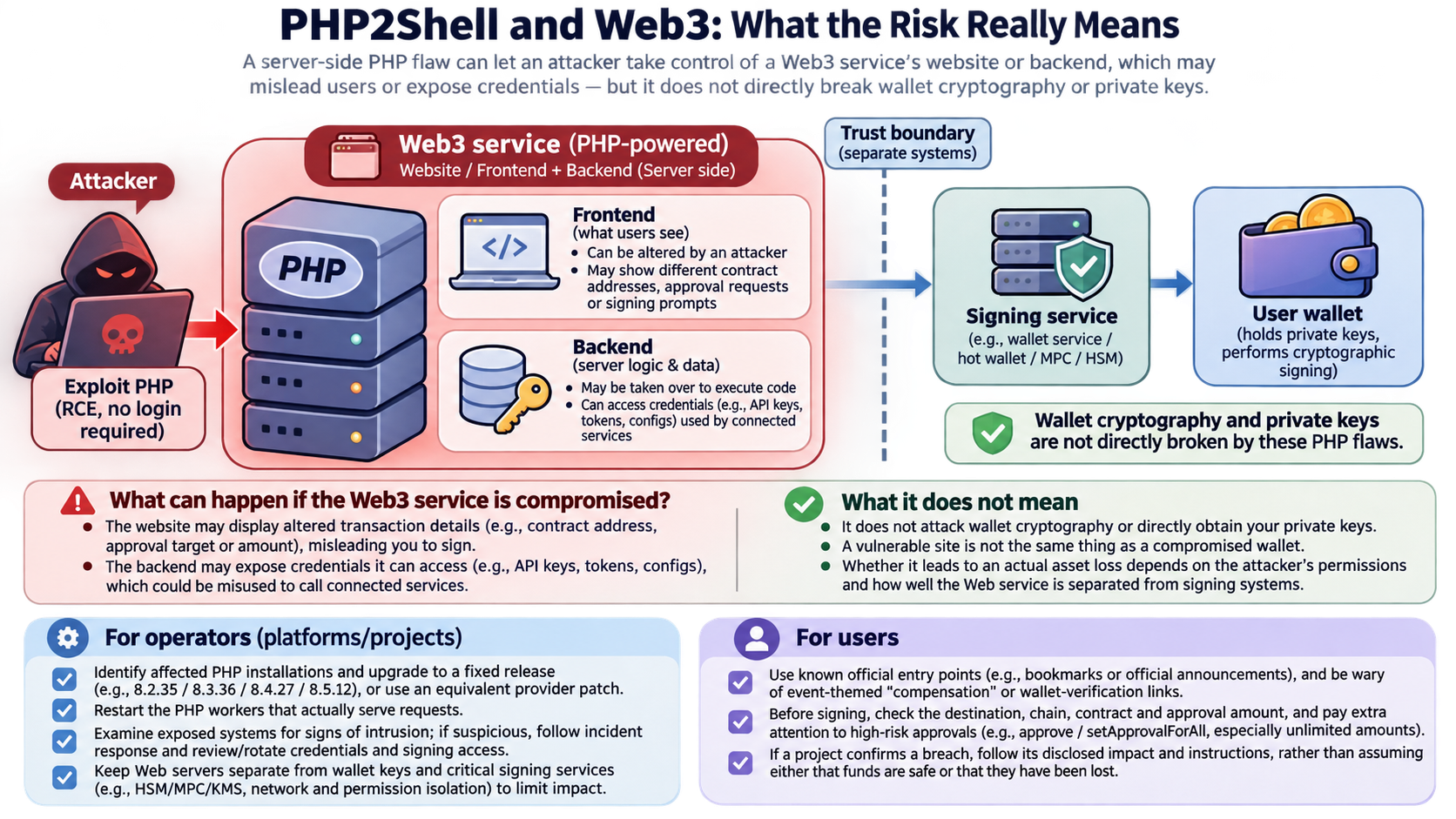
For users, this is not, by itself, a reason to move every holding. Use known official entry points, be wary of event-themed “compensation” or wallet-verification links, and check the destination, chain, contract and approval amount before signing. If a project confirms a breach, follow its disclosed impact and instructions rather than assuming either that funds are safe or that they have been lost.