For anyone relying on social login to recover a wallet, the practical question is who can help reconstruct the key—and what happens if that part of the system fails.
In an article published on November 10, 2026, Liu Jiaolian reported that assets had been transferred from several thousand Keplr social-login wallet accounts. The article said Keplr attributed the incident to a vulnerability in Web3Auth infrastructure, but noted that the precise cause had not been disclosed in detail. Its account of the losses and cause should not be read as an independently confirmed technical finding.
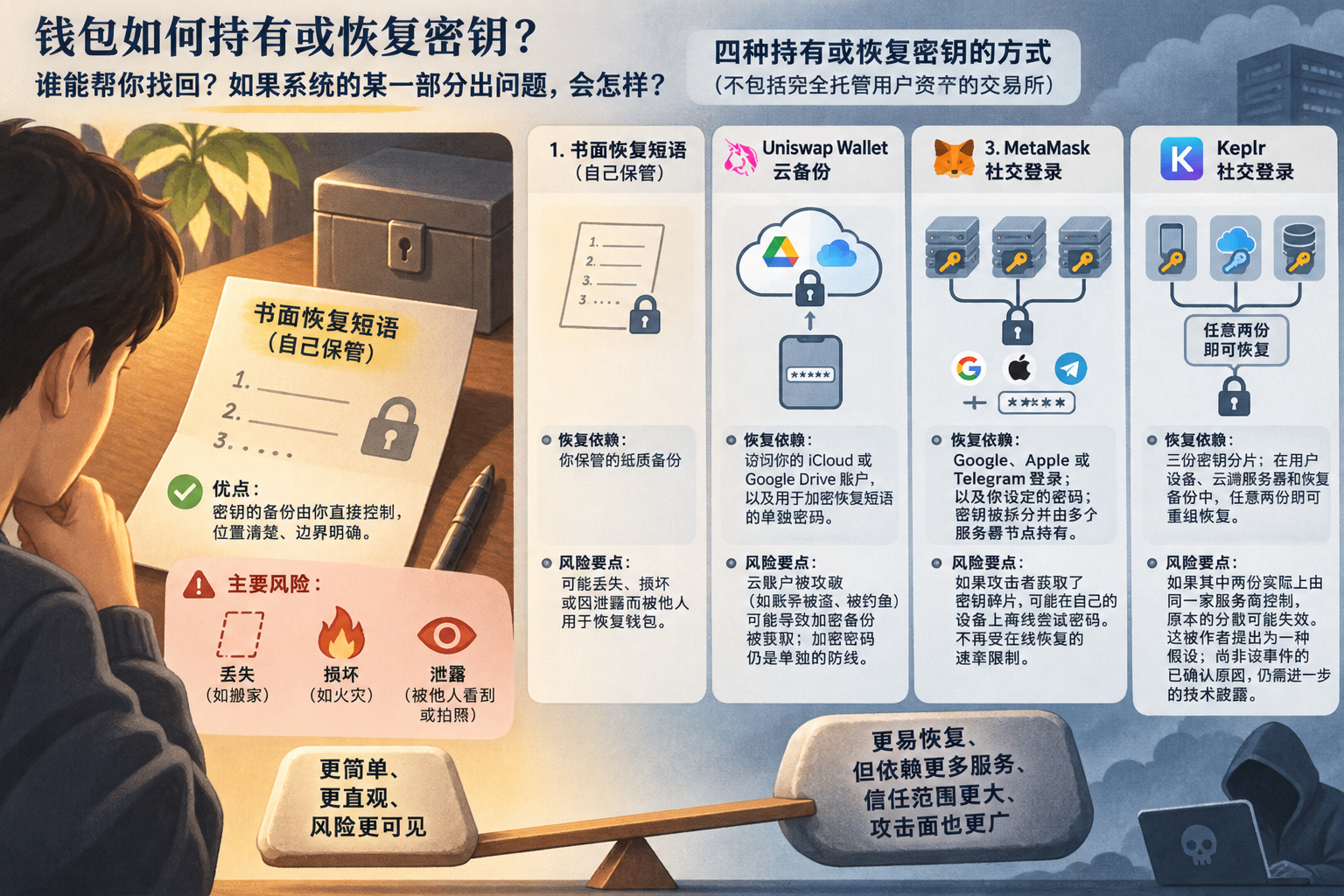
Four ways to hold or recover a key
Liu compared four approaches, excluding exchanges that hold full control of customer assets:
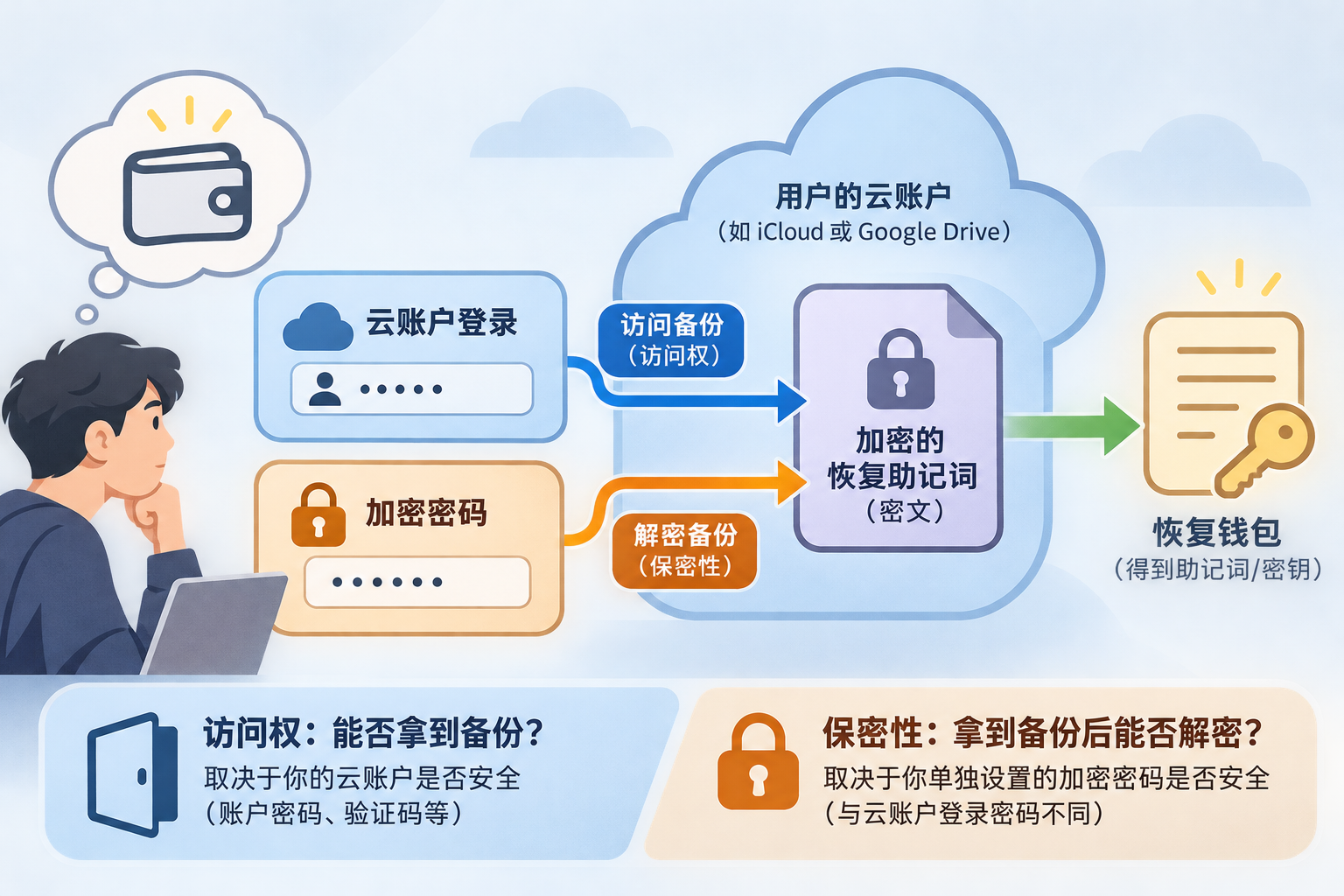
- A written recovery phrase: The holder controls the backup directly. That makes its location clear, but loss, damage or disclosure can prevent recovery or expose the wallet.
- Uniswap Wallet’s cloud backup: In Liu’s description, an encrypted recovery phrase is stored in the user’s iCloud or Google Drive. Recovery requires access to that cloud account and a separate password used to encrypt the phrase. Cloud-account compromise could expose the encrypted backup; the encryption password remains a distinct safeguard.
- MetaMask social login: Liu described an encrypted phrase held on MetaMask servers and a decryption key split among server nodes. Recovery requires both a Google, Apple or Telegram login and the user’s password. He argued that if an attacker obtained the key fragments, they could try passwords offline, beyond the rate limits of the normal online recovery process.
- Keplr’s social-login arrangement: According to Liu, the key is divided into three shares—on the user’s device, on a cloud server and in a recovery backup—with any two sufficient for recovery. He suggested that if one provider effectively controlled two shares, the intended separation could fail. He presented this as a hypothesis, not the established cause of the incident, and said further technical disclosure was needed.
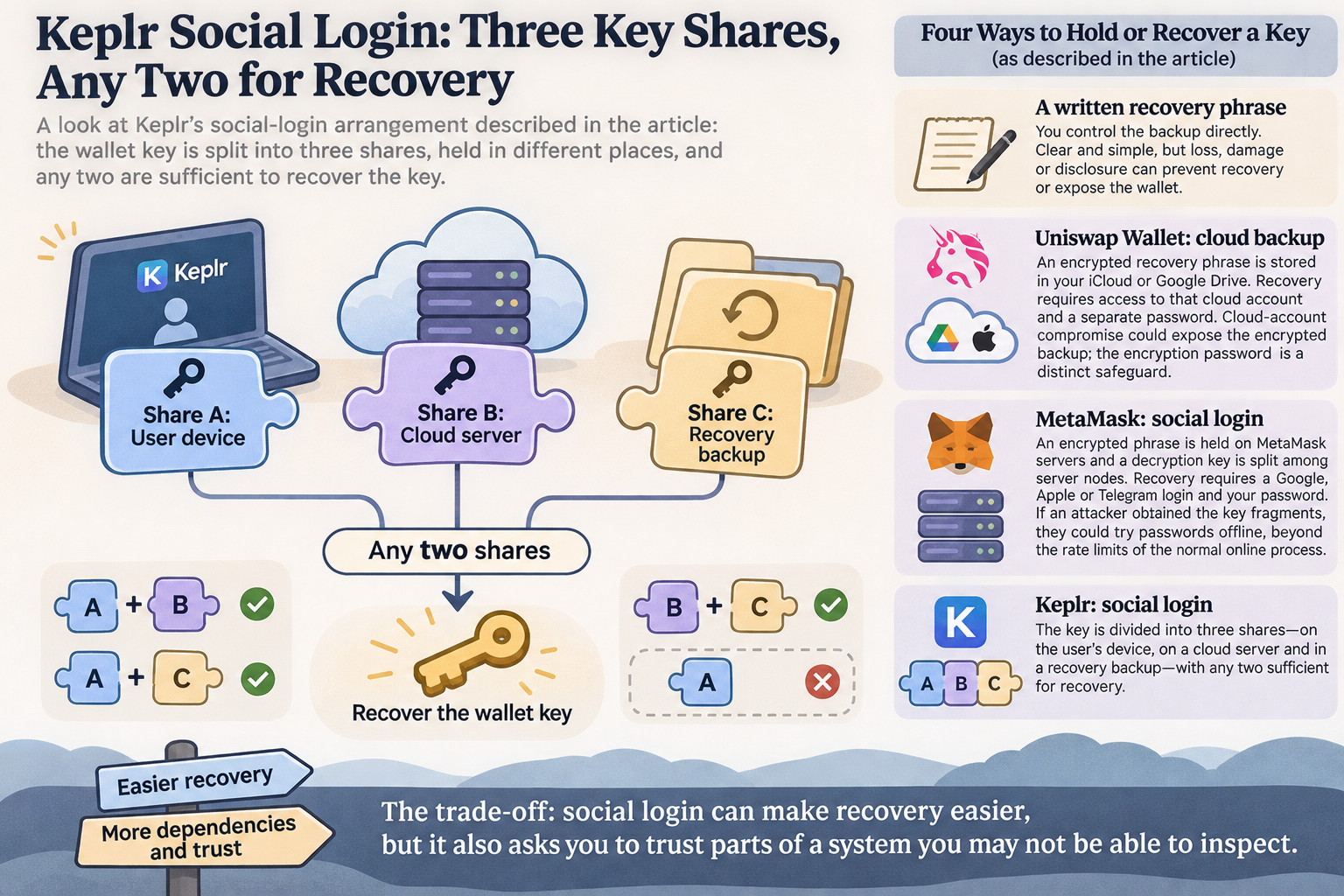
These designs trade a visible, physical backup risk for different recovery dependencies. Social login can make recovery easier for someone who might lose a written phrase, but it also asks them to trust parts of a system they may not be able to inspect. The useful check is not simply how many layers a wallet advertises: it is which credentials, services and key shares are needed for recovery, and who controls each one.
Source: techflowpost.com (originally published 2026-11-10 14:04 UTC+8)