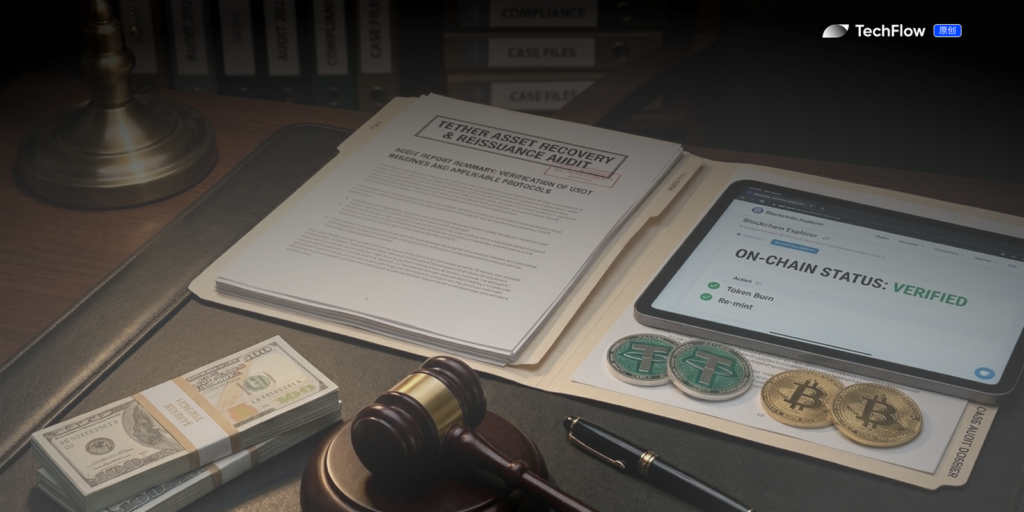
A freeze can stop stolen USDT from moving, but it does not put the tokens back in the victim’s wallet. On November 25, 2026, TechFlow, citing overseas media investigations, reported that Tether’s external legal team had quoted some victims of hacks and telecom fraud up to 20% of the frozen balance to recover and reissue their USDT. The quotes concerned cases involving millions to tens of millions of dollars; they were not a published rate for all theft cases.
How the quotes compare with Tether’s published fees
Tether’s public recovery guide covers a different problem: a user mistakenly sends tokens to the wrong address or smart contract. For individual transfers worth more than $1,000, the guide lists a processing fee of up to 10%, with a $1,000 minimum, plus a nonrefundable verification fee.
On a hypothetical $10 million balance, the processing fee at 10% would be $1 million. A 20% fee on the same balance would be $2 million. That comparison illustrates the size of the reported quotes, not a fee a victim was confirmed to have paid.
Why a freeze is not a refund
Once Tether blacklists an address, the USDT there cannot be transferred out, even to its rightful owner. To return the funds, Tether must use its smart-contract administrator key to destroy the frozen tokens and issue an equal amount of USDT to an address the victim designates.
Establishing who owns the funds can take much longer than freezing them. Victims may face repeated identity and source-of-funds checks. Cross-border cases can also depend on a court forfeiture order and cooperation among law enforcement agencies in several countries. If the original address holder contests ownership, Tether could face a civil claim. According to TechFlow, Tether has defended fees of up to 20% as covering overseas compliance investigations, outside counsel and potential litigation.
Some lawyers representing victims questioned how Tether arrived at the percentage, particularly when victims have no alternative provider that can reissue the tokens. Supporters and compliance specialists argued that the same central authority offers a remedy that might otherwise be unavailable: if recovery succeeds at a 20% fee, a victim could reclaim 80% rather than lose the full balance. The dispute concerns both the price of that remedy and who gets to set it.