Bithumb said on Nov. 25, 2026, that an intruder took wallet addresses, transaction histories and identity records from its internal business system. For affected customers, the risk is that someone could use those records to connect a name and phone number to crypto holdings and make a scam more convincing. The South Korean exchange said it found no evidence that the intruder directly breached its exchange service systems or customer database.
How the findings changed
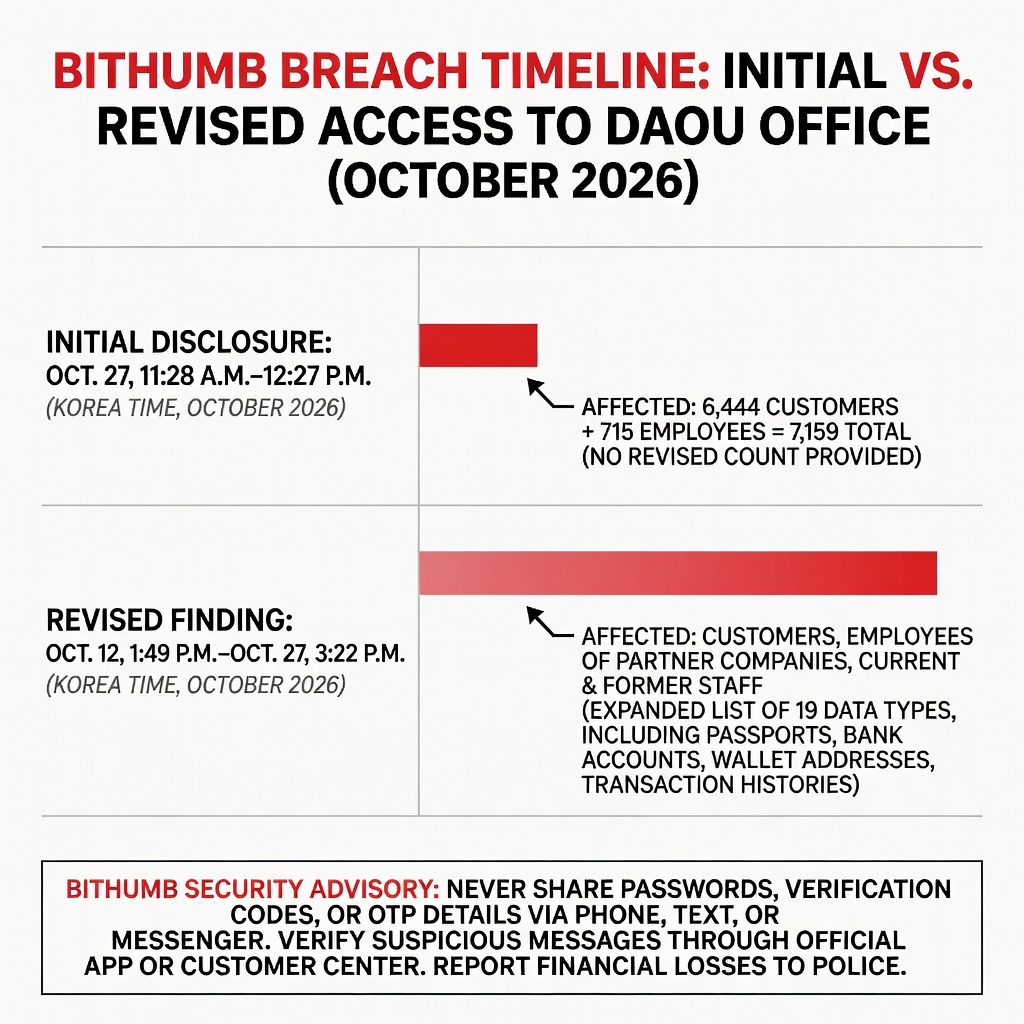
Bithumb’s review of Daou Office, its internal mobile groupware system, traced the intruder’s access from 1:49 p.m. on Oct. 12 to 3:22 p.m. on Oct. 27, Korea time. In its initial Oct. 29 disclosure, Bithumb had put the intrusion between 11:28 a.m. and 12:27 p.m. on Oct. 27 and said it detected the activity at 12:14 p.m. The revised timeline covers about 15 days rather than one hour.
Bithumb initially counted 6,444 customers and 715 employees, or 7,159 people in total. It said the same incident affected more people but did not give a revised count. Those affected include customers, employees of partner companies, and current and former Bithumb staff.
The updated notice lists 19 types of exposed information. Alongside wallet addresses and transaction histories, the list includes bank account numbers, passport and driver’s license numbers, resident registration numbers and copies of identity documents. It also includes member numbers, names, birth dates, gender, nationality, home addresses, mobile numbers, email addresses, occupations, employer names and work contact details. Not every type of information was taken for every person. Bithumb said it would notify people individually by email and text about which records were taken.
How to check a message claiming to be from Bithumb
Bithumb said it never asks for passwords, verification codes or one-time password details by phone, text or messenger. If a message or caller asks for any of those, the exchange advised users to stop responding and check through its official app or customer center. It urged anyone who suffers a financial loss to report it to police.
Bithumb said Daou Office is separate from customer exchange accounts and asset data. The company said it had blocked the intruder’s IP addresses, fixed the vulnerability and increased real-time monitoring of unusual trades and withdrawals. It was still investigating the cause and reviewing the security of all its externally exposed services.
The exchange set up a dedicated desk for financial and legal counseling and compensation reviews. Its pledge covers harm confirmed to have resulted from the breach; it did not announce a loss figure.