
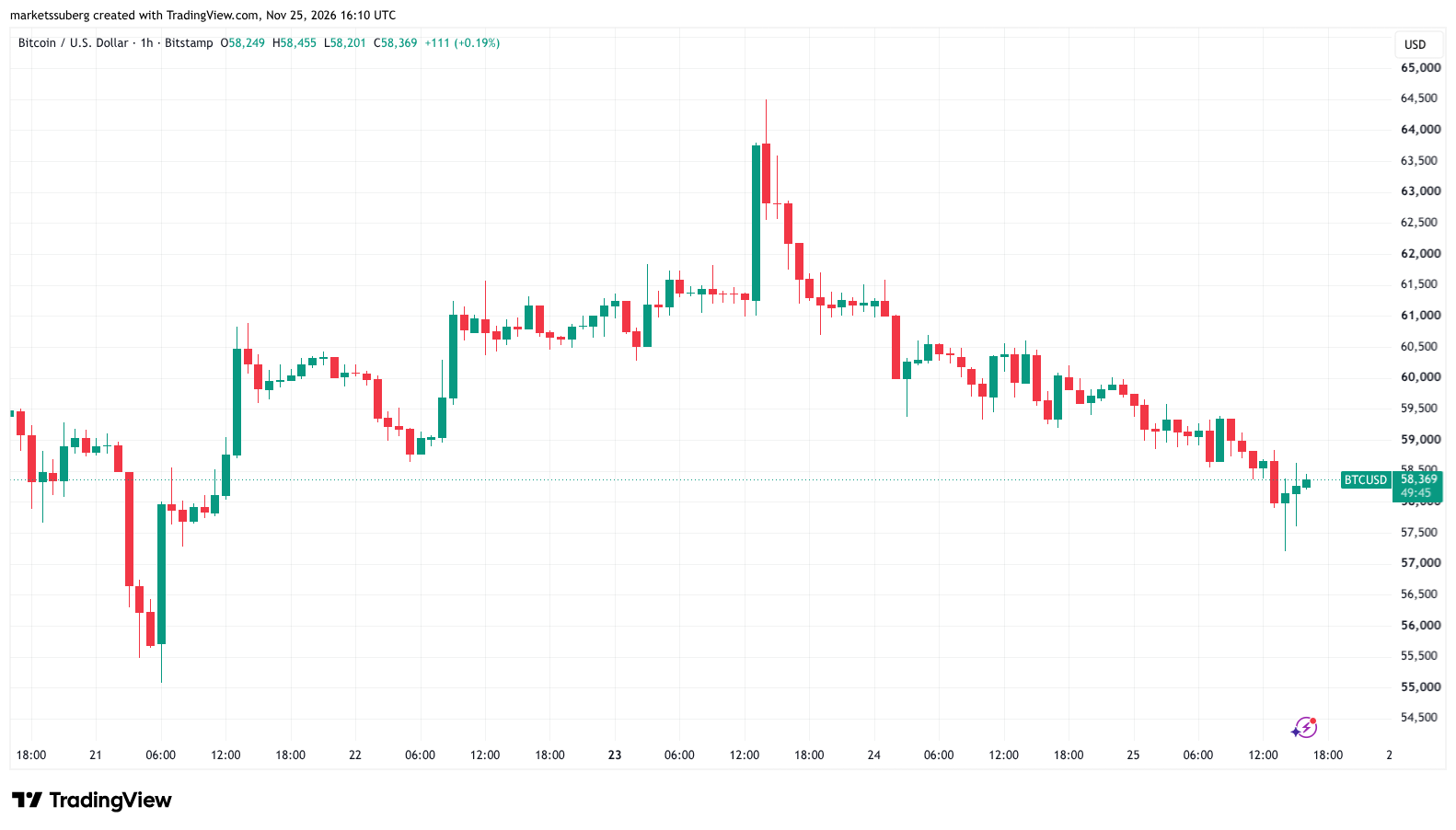
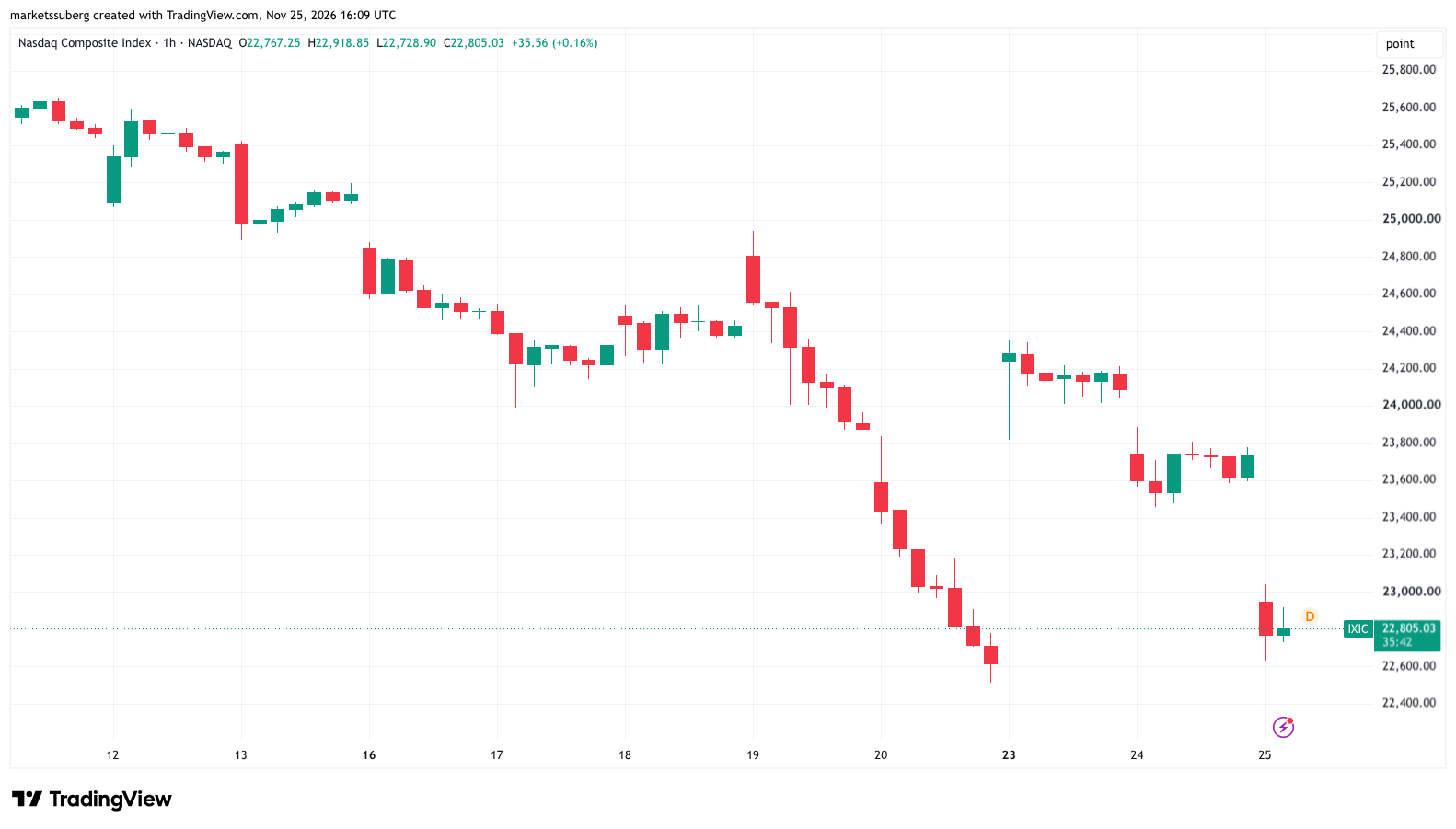
Bitcoin traded as low as $57,209 on Bitstamp on Nov. 25, 2026, down as much as 4.2% on the day, according to TradingView. The decline coincided with a sell-off in US stocks: by 4:30 p.m. UTC, the Nasdaq Composite had fallen 4.2% to 22,632 points and the S&P 500 was down 2.7%.
Across the crypto market, $512 million in positions were liquidated over 24 hours, according to CoinGlass. Long positions accounted for $416 million of that total.
Inflation and proposed tariffs
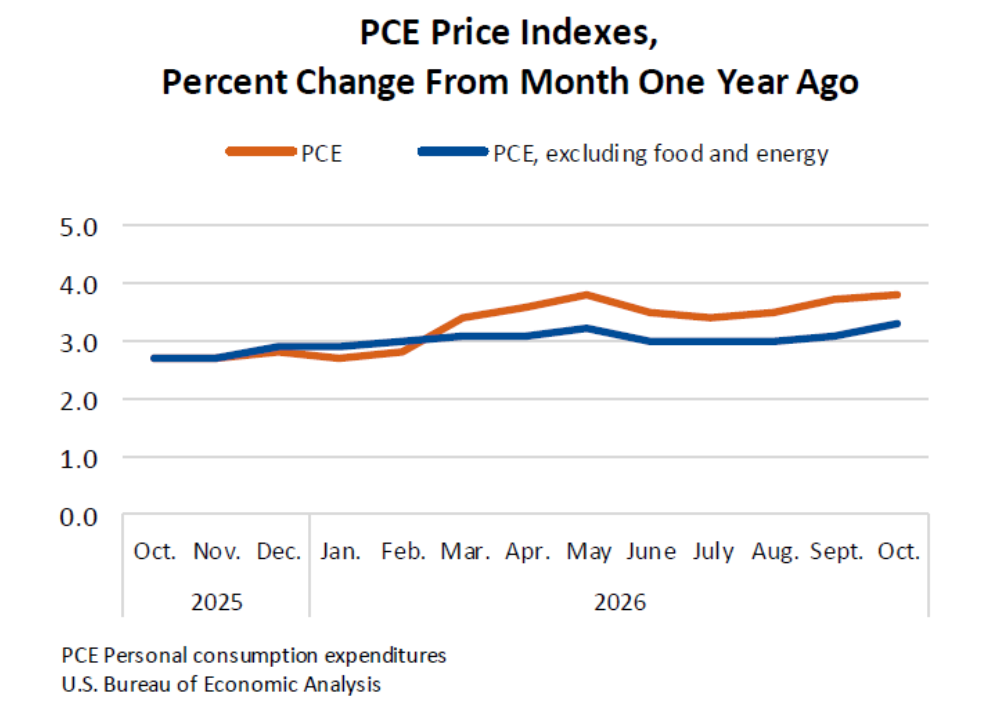
US traders were assessing both a stronger-than-expected inflation reading and the prospect of higher tariffs. The Bureau of Economic Analysis reported that the Personal Consumption Expenditures (PCE) price index rose 3.8% year over year in October, its second-highest reading since April 2023. Core PCE, which excludes food and energy, rose 3.3%, against expectations of 3.2%.
Markets had already been expecting the Federal Reserve to raise rates by 25 basis points at its December meeting. Economist Mohamed El-Erian said the latest data would leave markets viewing a Dec. 9 increase as “essentially a done deal.” The size of any increase remained unsettled: Fed Governor Christopher Waller had signaled the previous week that he would support a 50-basis-point move, while El-Erian said on Nov. 23 that a larger hike would be “ill-advised for both economic and financial reasons.”
The proposed tariff rates generally ranged from 15% to 20%. US Trade Representative Jamieson Greer told CNBC that the net increase would amount to a “top up” of a few percentage points and would take months to go into effect.
Bitcoin’s link to the Nasdaq
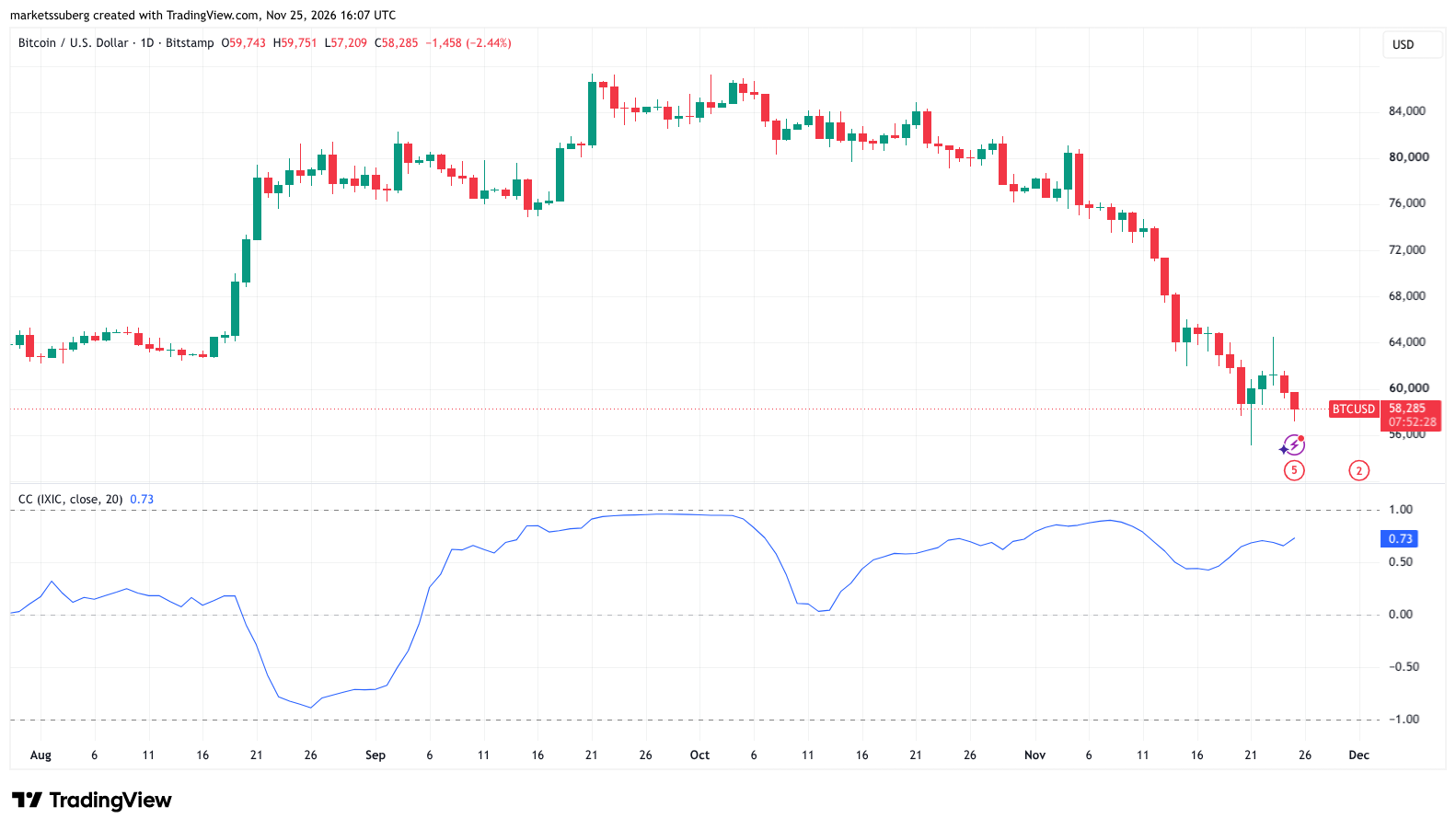
Bitcoin’s correlation with the Nasdaq stood at 0.73 on Nov. 25 and had been positive since early September, according to TradingView data. Trader and analyst Michaël Van de Poppe attributed Bitcoin’s weakness to the Nasdaq decline and suggested the Nov. 27 options expiry might also be adding pressure. Writing on X, he said his main scenario remained a rebound to $68,000–$72,000 over the following one to three weeks.